
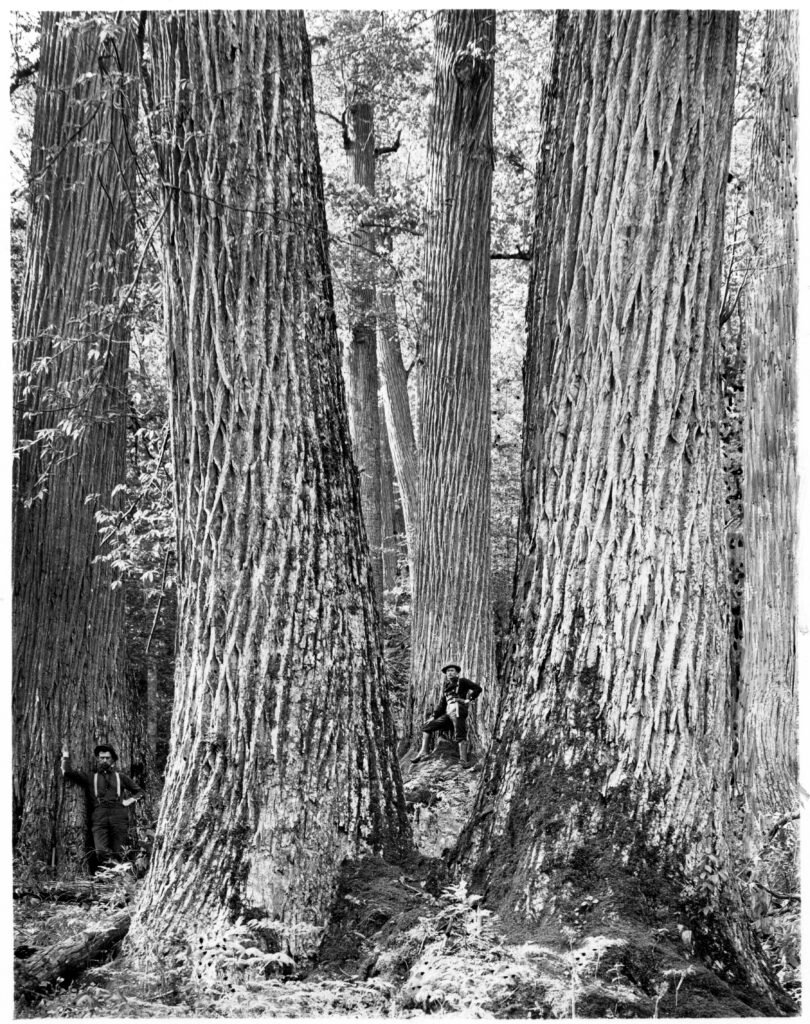
I love American Chestnut trees. I find a cluster of their small, short-lived, stump sprouts in the woods occasionally. Some of them dead. I lament and wonder at the tree’s dance with extinction. Once the tallest and most prolific tree in the Appalachian forest now reduced to understory stump sprouts by a parasitic, invasive fungus.

Old-growth American Chestnuts circa 1909. Photo courtesy of the Forest History Society, Durham, NC
I’m fascinated by the stories of how important the trees were to countless communities. I’m even more fascinated by the dedication of the many scientists and volunteers eager to restore America’s greatest tree to the forests of Appalachia. Before 1900, it was the mighty giant of the east, accounting for one in four trees in the forest. Then came the blight that wiped out four billion trees. This catastrophe has been called the greatest environmental disaster in American history.
I became a member of The American Chestnut Foundation when my conservation mentor, Wayne Hypes, died in 2005, at the age of 84. In the early 1900s, he and his father cut down the dead American Chestnut trees on their farm in Craig County, Virginia. They dragged them out of the forest with horses to split them into rails for fences. Wayne returned to his home farm in the late 1990s to recover some of those rails to make candle holders. I was honored to receive one. Some of these fences remain in use today and can be seen along the Blue Ridge Parkway.
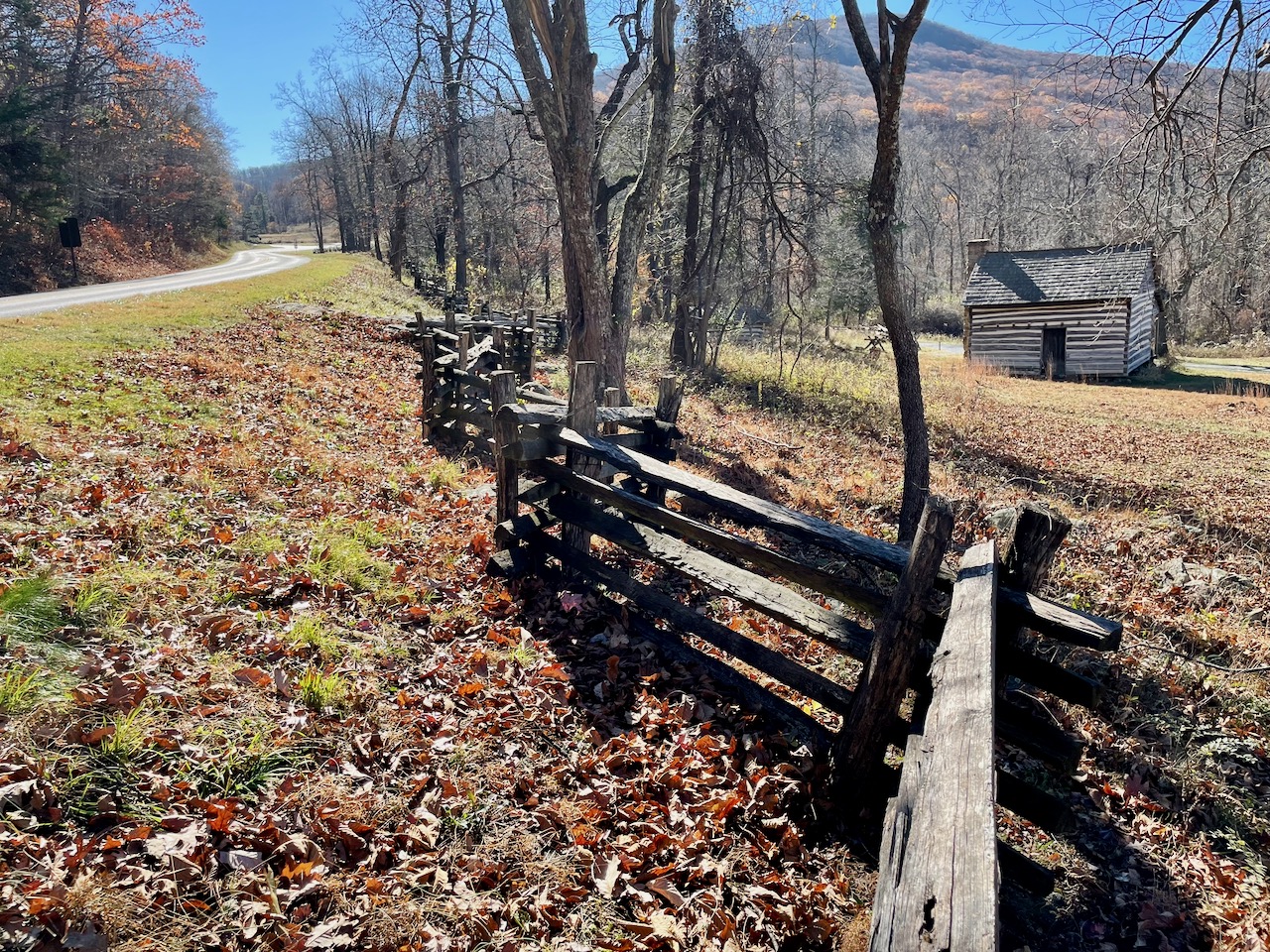
Chestnut rail fence along the Blue Ridge Parkway at Humpback Rocks.
Seed Member of the Foundation
I became a “seed member” of the foundation in his honor and planted Restoration Chestnut 1.0 nuts for years. These resulted from backcross-breeding with Chinese Chestnuts and have some natural resistance to the blight. More of mine have died than survived, not from the blight but from varmints and Japanese Beetles.
The first year of my membership, I bought three backcross nuts. They were $100 apiece. Gah! Those were expensive nuts. And you can bet I babied them. I planted them in the spring in half-gallon milk cartons as instructed. They were put out during the day on a table in the sun and brought them in during the night to protect them from frost. I talked to them and thought about them often during the day and dreamed about them at night.

Restoration Chestnut 1.0 germination at Whiskey Creek.
One day, I came home from work to find potting soil from their containers strewn over the table. I raced to my babies to see if they were okay. The nuts were gone! The villains were most likely chipmunks. The bastards!
I am glad to report, though, that we have four surviving Restoration Chestnut 1.0 trees, two growing vigorously.
The Long Road to Restoration
Scientists and volunteers have been searching for ways to restore the iconic American Chestnut to the Appalachian region ever since its demise from the fungal blight that was discovered in 1904. At that time, the American Chestnut was a foundation species, defining many communities that depended on its wood for buildings and furniture; its nuts were food for livestock, people, and wildlife; and its bark for tanning leather. It was said that one tree could build an entire house.
Then came the parasitic fungus from Asia. In a span of 50 years, it wiped out four billion American Chestnuts. The brown leaves of the dead trees covered the landscape. America’s greatest tree was declared functionally extinct. The desperation from the breadth of this destruction gave birth to long-lasting passion to bring this tree back to become at least part of the forest. Leading the charge for the restoration of the tree is The American Chestnut Foundation, with chapters and nurseries in many states.
How the Fungus Kills the Tree
Airborne spores of the fungus enter the tree through any crack, wound, or scratch. Once inside the bark, the spore germinates, and its mycelium dissolves and digests the tree’s vascular system. As the tree’s vascular system dies, water and nutrients cease to transport upward from the infection, causing that part of the tree to die. A sunken canker forms there and then the fruiting bodies of the fungus emerge to send spores out into the wind.
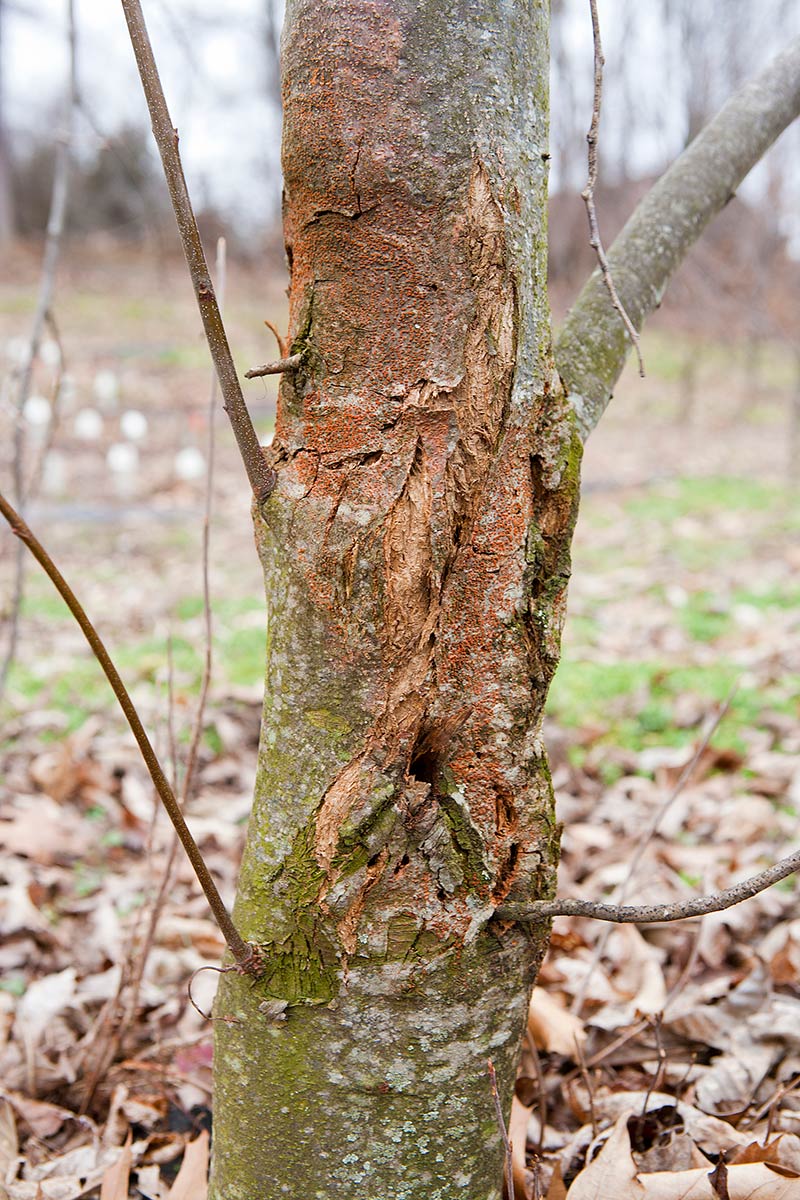
Blight canker and sporulation on American Chestnut. Photo credit courtesy of the American Chestnut Foundation
The fungus does not infect the roots of the tree. Root sprouts emerge, often living three to five years before being subjected to the fungus once again. Successive root sprouts continue. These can be found throughout the tree’s former range.
A Brief History of Restoration Efforts
Of course, the first and best defense against the deadly fungus is to find a resistant native tree. That hunt continues. Early on, hybrids combined with resistant Asian species were explored, but they were found to lack the high growth rate of the American species. That growth is required to compete in the forest. Next came the “atoms for peace” strategy born in the late 1960s, when scientists irradiated the nuts with gamma rays intending to force mutations that would somehow alter a genetic code for resistance. This method was likened to hitting a stalled car engine with a ball-peen hammer—it didn’t work.
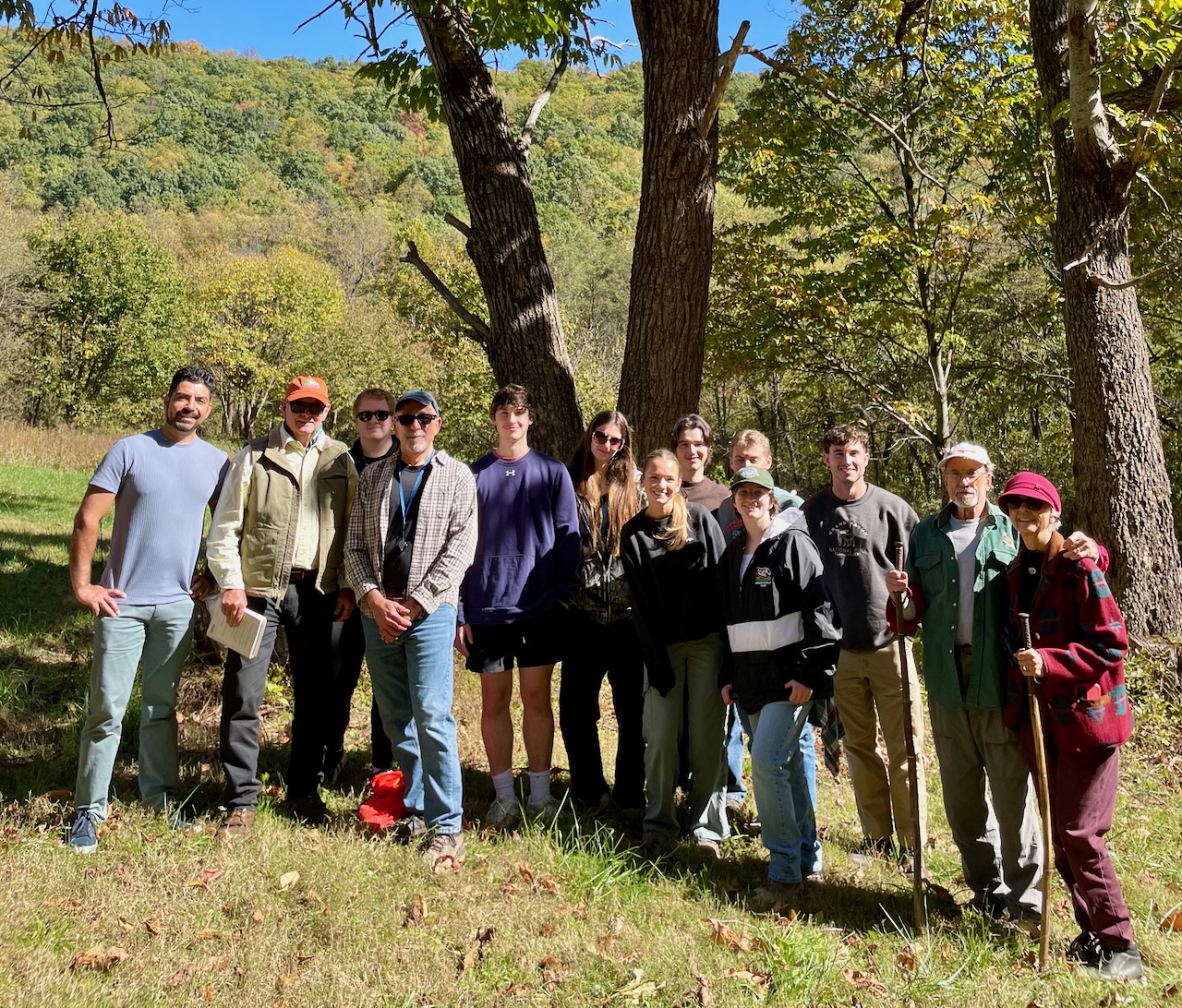
My 2026 JMU students with Dr. John Scrivani in front of the Thompson Tree in Lesesne State Forest. This American Chestnut is the result of two grafts onto irradiated root stock. Dr. Scrivani is the chair of the national research committee of the American Chestnut Foundation.
Backcross-breeding became the most successful method for decades. In this process, an American tree is crossed with a Chinese one that has natural resistance to the blight. Then the offspring is crossed back to an American for three generations in an effort to breed in resistance, resulting in a tree that is 15/16 American and 1/16 Chinese. Backcrossing is based on the theory that resistance can be triggered by one or two genes. Scientist have concluded that resistance is most likely associated with many more genes.

This Restoration American Chestnut 1.0 was planted in Swoope in 2015. It is now producing burs.
Darling 58/54
Genetic engineering is also part of the ongoing restoration strategy. The once shining star of this approach was the Darling 58/54 transgenic tree. Scientists inserted a wheat gene that protects the tree from the oxalic acid produced by the fungus. But the transgene reduces the vigor of the tree, and the tree still develops cankers, albeit smaller ones. These scientists continue work on the tree with a private corporation, but The American Chestnut Foundation has chosen to focus on more promising genetic improvements.
Another strategy is to find an inhibitor for the fungus: a parasite for the parasite. A virus was discovered that does just that. In a process called hypovirulence, scientists successfully infect American Chestnut trees with the virus to help the tree isolate the fungus.
Recurrent Genomic Selection
The latest and most promising strategy is recurrent genomic selection. The American Chestnut genome has been mapped, so scientists can use this mapping to identify trees with resistance and propagate them. This early identification greatly reduces the time required for selection since it takes at least five years for a tree to produce nuts. Scientists can send tissue samples to a genome lab that can predict the chances of resistance. Those with the most resistance are then planted in seed orchards and field tests. The results of field testing will be used to validate and refine the genetic model for use in the next generation.
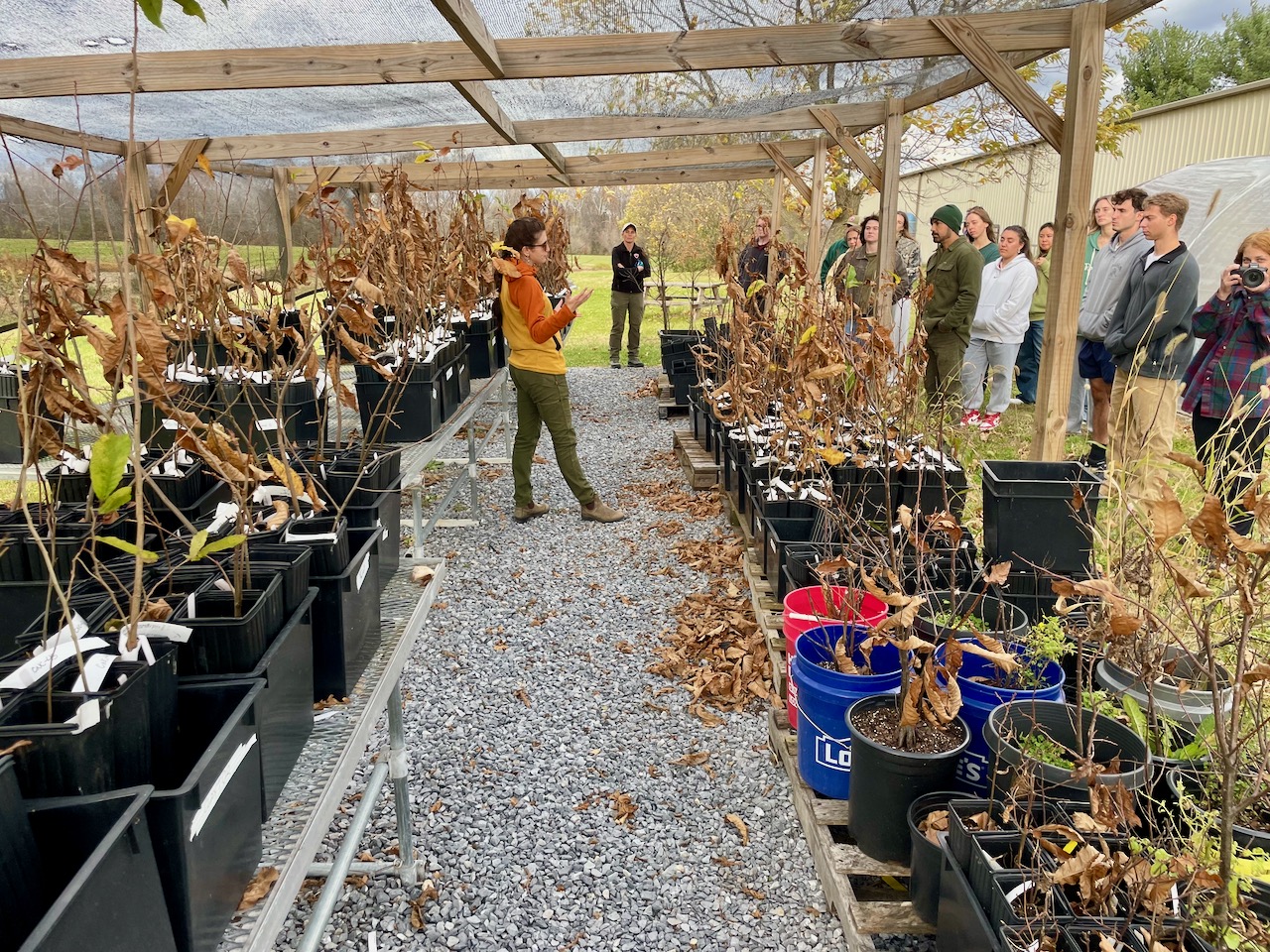
Zoe Bergman, Research Program Manager for the VDOF informs my JMU ISAT students about the Recurrent Genomic Selection process to reestablish American Chestnuts to the Appalachian Forest.
Seed orchards and progeny tests of these genomically selected trees are being planted at Meadowview Research Farms, Matthews State Forest, Claytor Nature Center, and other forest locations. The Virginia Department of Forestry raises and sells seedlings from early generations of improved seedlings and hopes to incorporate the latest generation from the American Chestnut Foundation as they become available.
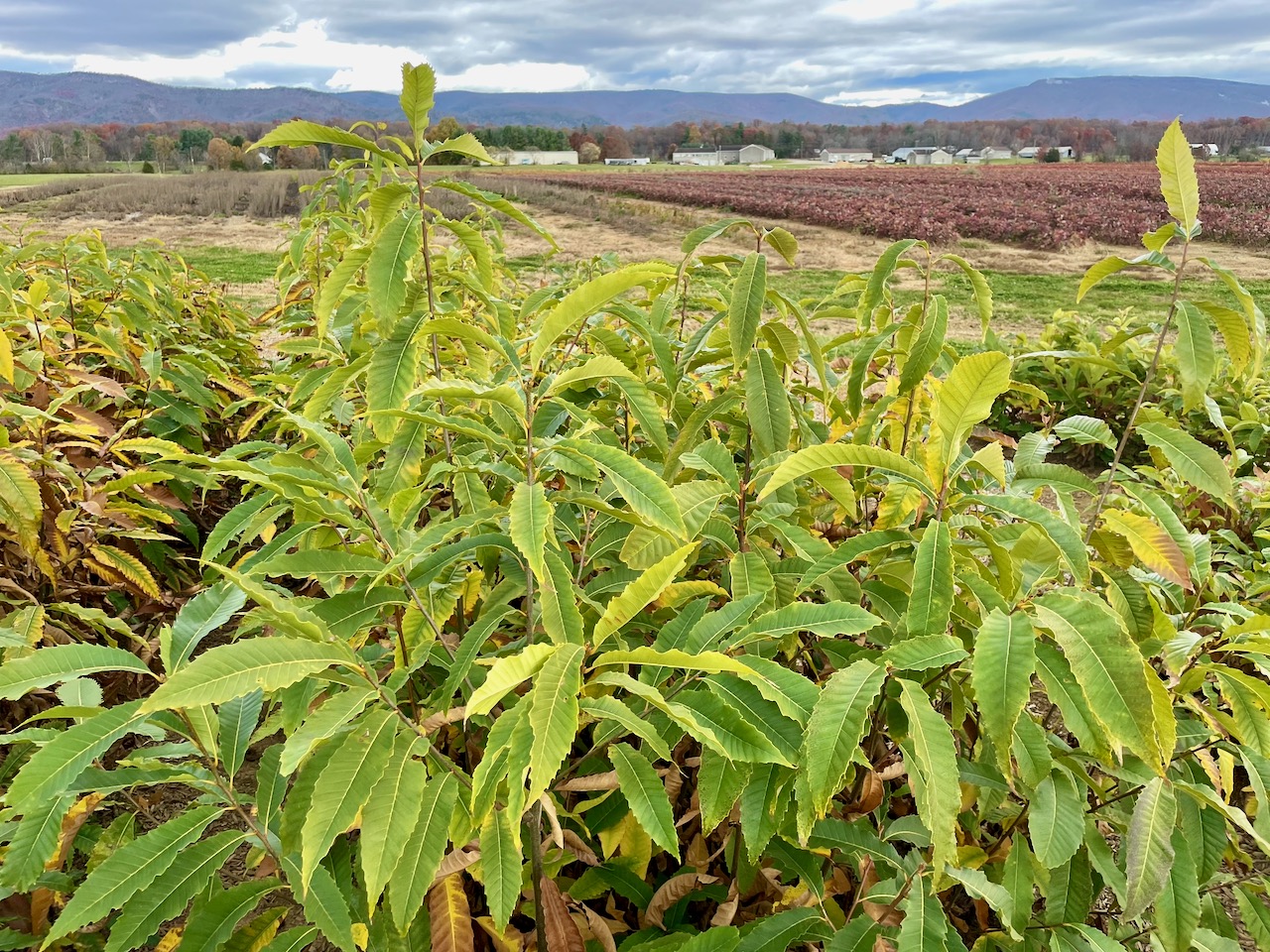
American Chestnuts growing at the VDOF nursery in Crimora, VA.
You Can Help
Would you consider helping us restore America’s greatest tree to the Appalachian forest? Join the American Chestnut Foundation, plant some nuts, volunteer, share the passion.
Note: This was designed and written by a real person: me. All photos by me unless otherwise noted. There are no paywalls, ads, surveys, or pop-ups.
The post American Chestnut Update appeared first on Getting More on the Ground.

