
Updates from WV Rivers Coalition
October 2026
Happy Halloween from WV Rivers Coalition!
There’s plenty happening in West Virginia that’s scarier than a haunted house. From threats to our constitutional rights to developments that have already damaged streams and wetlands, we have had a lot to keep an eye on this fall.
But here’s the good news: West Virginians continue to show up for clean water, public lands, and our people. So far in 2026, you have helped deliver nearly 60,000 messages to decision-makers to advocate for a wild & scenic rivers designation, to protect wetlands and underground streams, and on bills throughout the legislative session.
Thank you for speaking up with us! Now, here’s what our team has been working on together this month.
Standing up for WV communities and the environment
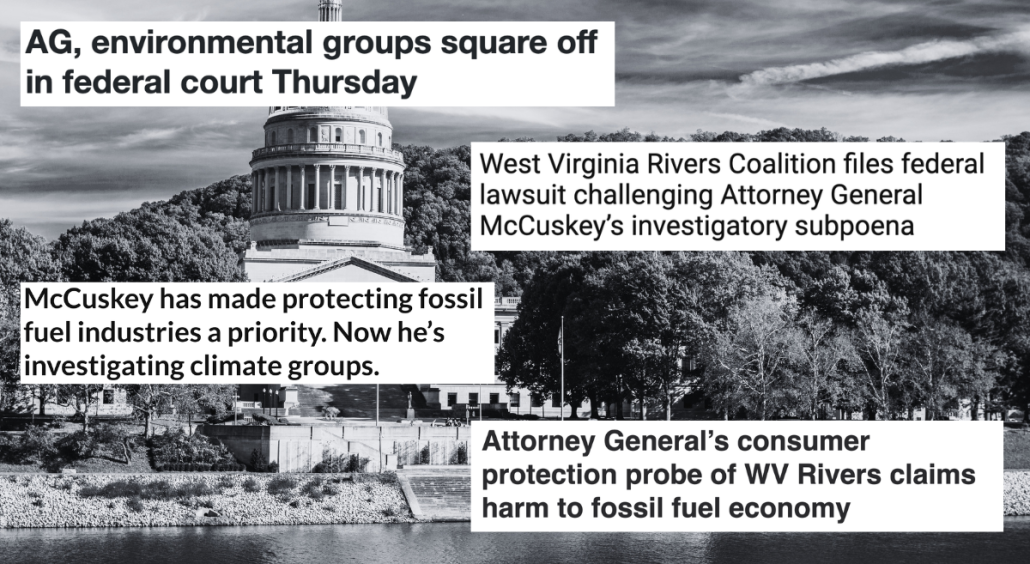
Our lawsuit challenging the Attorney General’s subpoena has made headlines, with coverage from WV MetroNews, WOAY-TV, WTAP, Mountain State Spotlight, and more shown above. View all our press hits here.
On October 22, WV Rivers Coalition filed a federal lawsuit challenging an investigatory subpoena issued by West Virginia Attorney General John B. McCuskey. On October 29, we argued our case in Federal Court before U.S. District Judge Joseph R. Goodwin.
The court granted a temporary restraining order blocking the Attorney General from enforcing the subpoena against us.
In his ruling, Judge Goodwin found that the groups targeted are likely to succeed on their claim that the subpoenas violate their First Amendment right to associate. He wrote that the First Amendment does not allow the state to use its investigative powers to target organizations for their advocacy. This is an important step toward protecting our ability — and the ability of our community partners — to speak up for clean water, protected public lands, and healthy communities.
The subpoena demands a sweeping range of records dating back to January 2017, including our public statements, internal communications, scientific materials, and information about our relationships with community partners and other organizations.
We believe this investigation is an overreach that threatens our First and Fourth Amendment rights and could discourage people and organizations from speaking up for clean water, protected public lands, and healthy communities.
Judge Goodwin’s order recognizes the serious harm these demands can cause to advocacy organizations and the people who work with them. As we have previously stated, this investigation was no more than a fishing expedition in an attempt to chill our efforts.
Judge Goodwin said:
“In part, I agree… But even on a fishing expedition, hoping to just get one bite in the vast and quiet water, a person brings a fishing pole. And in other cases, perhaps, a net. Here, AG McCuskey has abandoned both the fishing pole and the net. Instead, he has brought dynamite to the lake.”
The Charleston Gazette-Mail also reported that other groups were the targets of similar subpoenas from the Attorney General’s Office, raising questions about the use of investigative powers and the rights of organizations working in the public interest.
The temporary restraining order blocks enforcement of the subpoenas through 4 p.m. on November 12, unless the court extends it. A hearing on a preliminary injunction will be scheduled separately. This is not a final ruling on the lawsuit, but it provides important protection while the case moves forward.
We’ve spent more than three decades working alongside communities, scientists, public agencies, and other partners to protect West Virginia’s waters.
While we are taking risk management steps to protect ourselves and our partners from the Attorney General’s harassment campaign, our commitment to protect West Virginia’s waters has not changed.
Thank you to the many folks who have reached out to express their support. It means the world to know you and thousands of others have our back.
Data centers: Development shouldn’t come at the expense of clean water
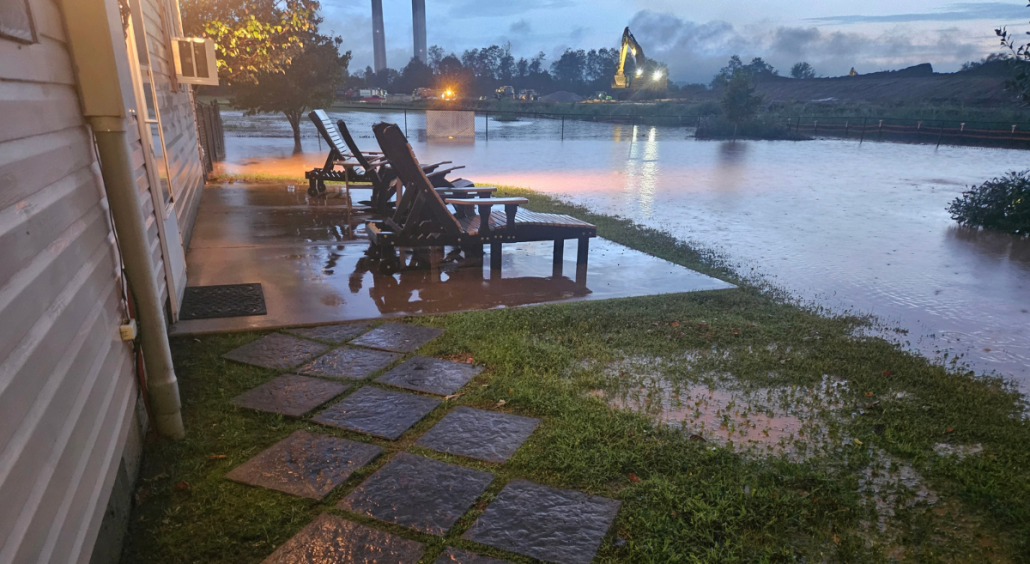
There is no need to make this image scarier. Mason County residents Randy and Marsha Frame shared this image of their flooded yard neighboring the construction site for the Monarch Cloud Campus.
When it comes to protecting our streams and wetlands, the devil is in the details.
On Monday, October 26, members of WV Rivers Community Engagement team Carrie Decker and Charlise Robinson attended a public hearing in Point Pleasant about proposed state water permits for the Monarch data center project in Mason County.
Our Senior Scientist, Than Hitt, also submitted detailed technical comments raising concerns about the project’s potential impacts on local waters. Here’s what has us most concerned:
- Missing information: Federal records identify more than 20 acres of wetlands and nearly three miles of streams across the larger project site. The two permit applications don’t account for all of those waters. Instead, there will be a Federal 404 permit application process later. State and federal waters should be evaluated together to account for the full scope of the development and its potential impacts.
- A project in pieces: Data center buildings, power generation, pipelines, and transmission lines are part of a larger development. Reviewing permits separately can leave the combined impacts on streams, wetlands, runoff, and flooding out of the picture.
- Documented construction problems: Between May and September, the state issued 10 notices of violation for construction activities at the project’s power generation site. Inspectors documented erosion and sediment-control failures, including sediment leaving construction areas and entering streams and wetlands. Additionally, the neighboring community has experienced flooding four times since construction began.
Our comments asked the West Virginia Department of Environmental Protection to delay permit approval until the company provides sufficient information, addresses the project’s combined impacts, and demonstrates that previous pollution problems have been corrected.
At the workshop and public hearing, community members and Ohio River Coordinator Charlise Robinson called for more time to review the project and submit comments. WVDEP had set the comment deadline to coincide with the meeting, leaving residents to process new information and comment on the spot. We will continue to monitor developments.
West Virginia shouldn’t have to choose between economic development and clean water. Environmental protections help ensure that communities aren’t left paying the price for poorly managed development.
While the comment period is closed, you can still get informed about the issues surrounding data center development in our state. Click the button below to see our fact sheets.
No crystal ball required: West Virginia needs better ways to prepare for flooding.
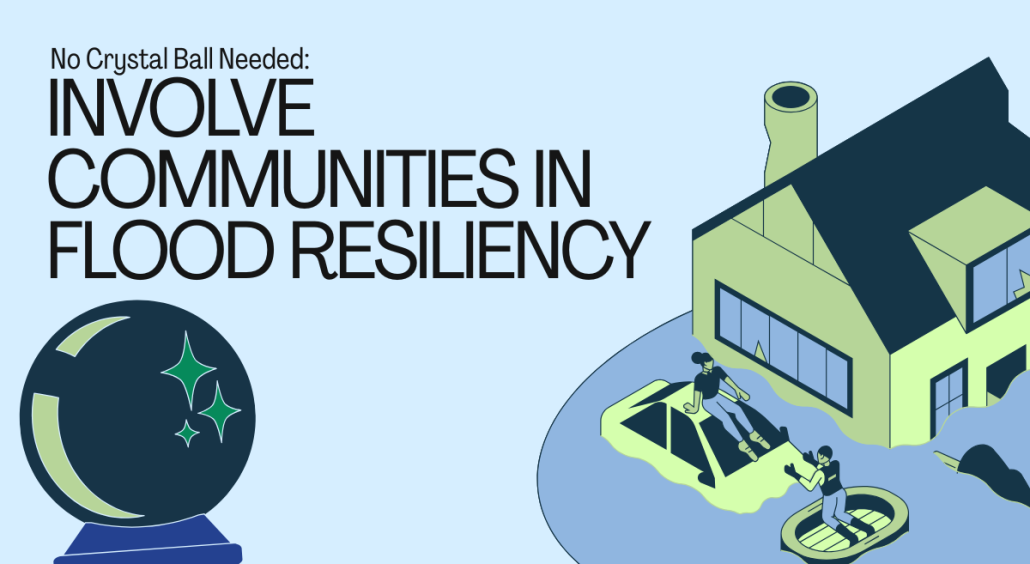
As flooding and extreme weather events become more regular in West Virginia, our communities need our leaders to invest in our resiliency and ensure local voices are at the table.
Flooding is a growing challenge for communities across our state. Addressing it takes good science, local knowledge, and the voices of people who live with the impacts firsthand.
Last month, WV Rivers’ Carrie Decker and Maria Russo attended the Flooding in Appalachian Streams and Headwaters (FLASH) Initiative symposium at West Virginia University.
FLASH brings together universities in West Virginia and Kentucky for multi-year research on flooding, preparedness, mitigation, and response. Carrie and Maria presented on how flood data can support advocacy and public education, highlighting materials developed with Rebuild by Design.
The big takeaway? Communities need a seat at the table when flood solutions are developed. People who experience flooding firsthand should help shape the plans and decisions that affect their homes, roads, and neighborhoods.
Safe water starts in our communities
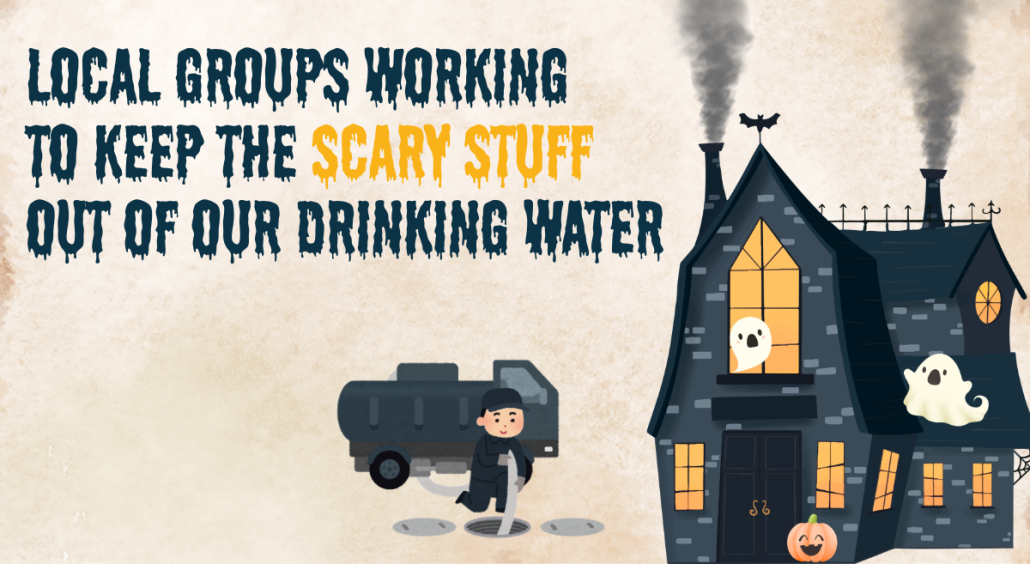
Local groups across West Virginia are working to keep the scary stuff, like fecal coliform and industrial discharges, out of the sources of our drinking water.
Through our Safe Water for WV program, we’re supporting local organizations that are turning community ideas into practical projects to protect drinking water and improve watershed health.
Here’s a peek at what’s underway:
- Greenbrier River Watershed Association (GRWA): After water testing identified increased fecal coliform levels along some tributaries of the Greenbrier River, the GRWA offered targeted septic pumping assistance to four households in the affected area. Properly maintained septic systems can help reduce contamination and protect nearby waterways.
- Plateau Action Network (PAN): In the Wolf Creek watershed, PAN is preparing several projects for spring 2027, including a rain barrel workshop with the Town of Fayetteville, a pilot project exploring mycoremediation (using fungal mycelium to break down pollutants!) to help address water pollution, and an educational mural and signage project to raise awareness about local water quality and source water protection in the town park.
- Buckhannon River Watershed Association (BRWA): At its 10th annual RiverFest, the BRWA hosted a rain barrel workshop where a dozen families assembled, decorated, and took home 100-gallon barrels to install at home to collect rain. Members also received water-testing training and are preparing for ongoing monitoring of the Buckhannon River and nearby tributaries, including with the Bull Run community.
- Potomac Valley Audubon Society (PVAS): PVAS is working with WV Rivers to plan a rain barrel workshop for March 2027, with the goal of making participation financially accessible to local households. The project is also laying groundwork for environmental education about water quality.
- Elks Run Watershed (ERW): The watershed group has refreshed its website with clearer navigation, updated content, stronger photos, and easier-to-find information about water quality, source water protection, and ways to get involved. The project also streamlined email newsletter publishing and improved tools for collecting resident contact information.
We’re grateful to these partners for doing the work, sharing what they learn, and helping their neighbors get involved.
Wanted: Protected public lands and clean water for all!
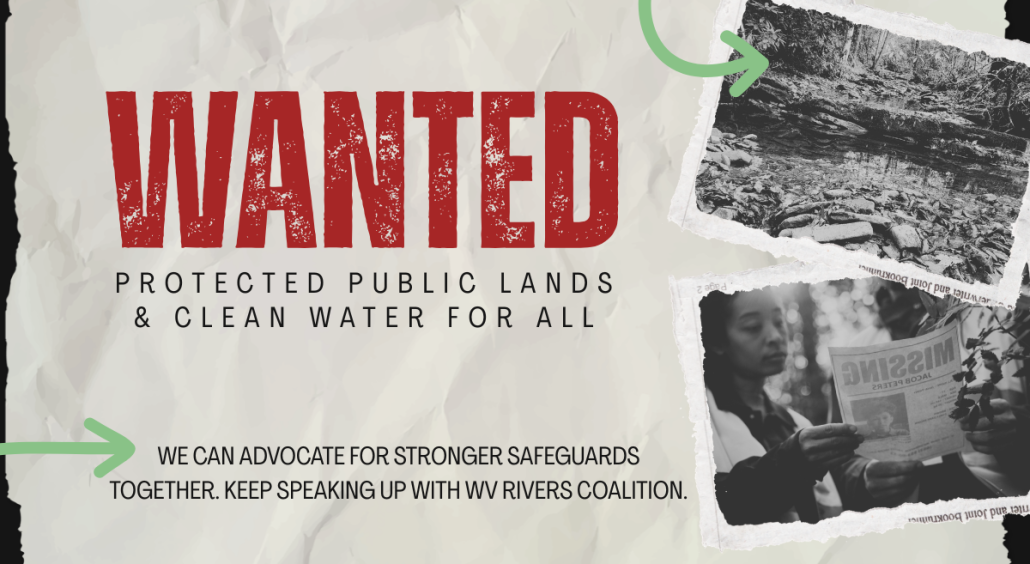
Thousands of people took action with us on two federal efforts recently, and it is clear: West Virginians want protected public lands and clean water for all!
Thank you to everyone who took action to protect West Virginia’s public lands and the waters that connect us. People in West Virginia and 31 other states used our advocacy tools to send 2,113 messages supporting the Roadless Rule, which protects 44.8 million acres of national forests from road construction and certain types of development, and 1,509 messages opposing proposed rollbacks to federal Clean Water Act protections.
The Roadless Rule covers more than 182,000 acres of West Virginia’s national forests, including places like Roaring Plains, Seneca Creek, Cheat Mountain, and Tea Creek. These forests protect headwater streams, wildlife habitat, and drinking water sources.
Meanwhile, proposed changes to the definition of “Waters of the United States” (WOTUS) could leave many wetlands and streams without federal Clean Water Act protections. EPA estimates that 96% of West Virginia’s wetlands could lose federal protection under the proposal.
Your voices matter. Federal agencies must review public comments and explain how they respond to significant feedback as they develop final rules.
We’ll keep you updated as these decisions move forward.
Election Day is this Tuesday!
Don’t boo, vote for clean water!
Tuesday, November 3, is your next chance to make your voice heard.
The choices made by elected officials can shape the future of our rivers, drinking water, and public lands. This Election Day, we encourage you to make a plan to vote with clean water, healthy communities, and protected public lands in mind.
Polls are open from 6:30 a.m. to 7:30 p.m. on Election Day.
Not sure where to go or what you need to bring? Check your registration and polling information before you head out.
Creep it real with us!
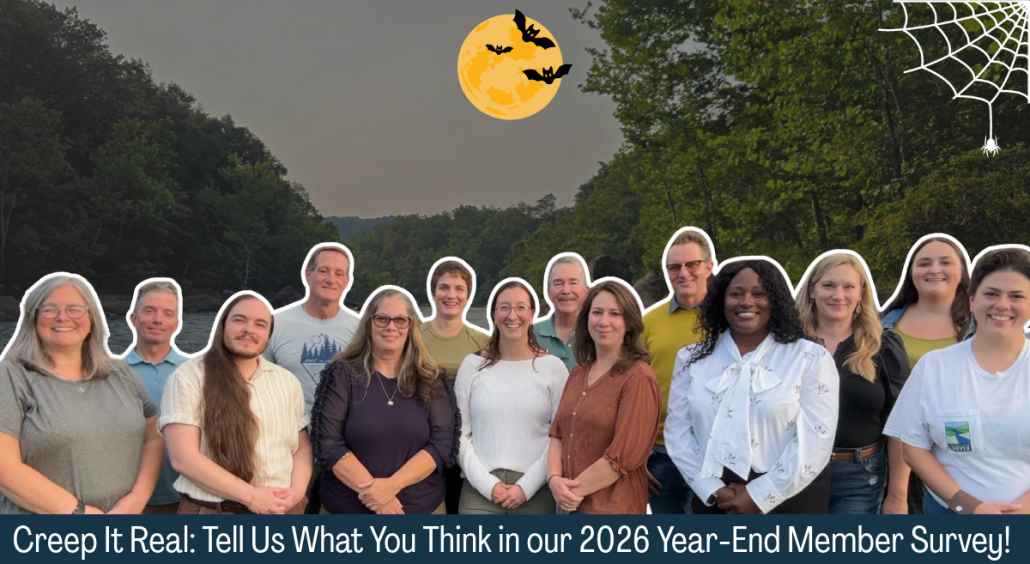
Tell our team what you think in our 2026 year-end member survey.
There’s no shortage of unsettling news about the future of our water and public lands. We know that can feel overwhelming, but West Virginians have always cared for the places that sustain us.
Every person who submits a public comment, monitors a stream, helps a neighbor, or speaks up for their community is part of that work.
WV Rivers is staying focused on the job ahead, and we want to hear from you. Will you take our 2026 Year-End Member Survey?
Your feedback helps us understand what issues and places matters most to you, how we’re doing, and where we should focus our work in the year ahead. Whether you’re a longtime member or a newer supporter, we’d love to hear from you.
Thanks for being part of this community. No tricks, just neighbors working together for our shared future in the Mountain State.
Happy Halloween!
-WV Rivers Coalition


