This post has been revised with breakthrough information on how to eliminate House Sparrows from your nesting boxes. It was originally posted in 2017, revised on 4/5/2020, and again today.
The House Sparrow is perhaps the most adaptable and prolific bird species on the planet. Often called English Sparrow, its scientific name Passer domesticus is Latin for small, active bird belonging to the house. It is native to Europe and has spread to all corners of the world. Its adaptation follows human civilization. Where there are people, there are House Sparrows.
Description
House Sparrows are about six inches in length and are cavity nesters. They are about the same size as Eastern Bluebirds and Tree Swallows. That’s why they all compete for nest boxes. Make sure your boxes have an entry hole no larger than ONE inch in diameter. If larger, another invasive, non-native, European bird, the European Starling, will invade the box.

House Sparrow male. Photo by my birding friend, Marshall Faintich

House Sparrow female. Photo by my birding friend, Marshall Faintich.
The House Sparrow is Not Native to North America
This bird is not native to North America. It is an aggressive species that will take over the nesting sites, territories, and food sources of native birds. Therefore; it is an invasive, non-native species that is very difficult to manage. For a more detailed description of the bird go to this link at the Cornell Lab of Ornithology.
House Sparrows Attack and Kill Native Nesting Birds
Some years ago, I opened one of our nest boxes to find a House Sparrow sitting on her eggs. She quickly flew away. Something was unusual. She built her nest on top of a Tree Sparrow nest. I removed the aggressor’s nest, tossed it on the ground and crushed the eggs. Underneath the nest was a dead female Tree Swallow. Her head had been crushed in by the attacking beak of the aggressor. The Tree Swallow’s eggs were still intact. How horrible a death.
For more information on House Sparrow attacks and management of this invasive, aggressive bird, visit the Sialis website, they have much more detail.
Identification of House Sparrow Nests and Eggs
Their nests are easy to identify. They always have a “dome” or roof over the nest and they always have feathers in them.

House Sparrow nests always have a dome and various feathers. Photo credit R. Whitescarver.
The presence of the dome, in a nest box, is a tell-tale sign that it is the aggressor’s nest. The nest material is rather “trashy”, made up of all kinds of material including various feathers.
The eggs are dark brown and white speckled.

House Sparrow Eggs. Photo credit R. Whitescarver.
How to Save the Lives of Native Cavity Nesting Birds
We continue to learn . . . after decades of monitoring Blue Bird boxes, I have the following conclusions about saving the lives of our native birds from the murdering, aggressive, non-native House Sparrow. If you find the aggressors nesting in your nesting box try these techniques.
- Move the floor of the nesting box to within 3 inches of the bottom of the entrance hole. This has been 100% effective for me.
- Move the box away from House Sparrow infested areas.
- Trap and destroy House Sparrows. Yes, there are some ethical issues here. Go to the Sialis website for details.
- Remove House Sparrow nests with eggs and destroy them. Very effective but time-consuming.
- Replace House Sparrow eggs with wooden ones. This may work the first year but they figure it out.

To deter House Sparrows from using a traditional Bluebird nesting box, remove the floor and move it up to within 3 inches from the bottom of the entrance hole. This prevents them from building their nest dome. Photo credit R. Whitescarver
Replace House Sparrow Eggs With Wooden Ones
If you find a dome-shaped, trashy nest with eggs in your nest box, carefully take out the eggs and replace them with similar-sized eggs made out of wood. The parents will sit on them possibly the first season and never hatch a single one. However, the aggressors will eventually figure it out and one study conducted by Sparrow Swap concluded that this technique will delay House Sparrow egg-laying by about ten days.
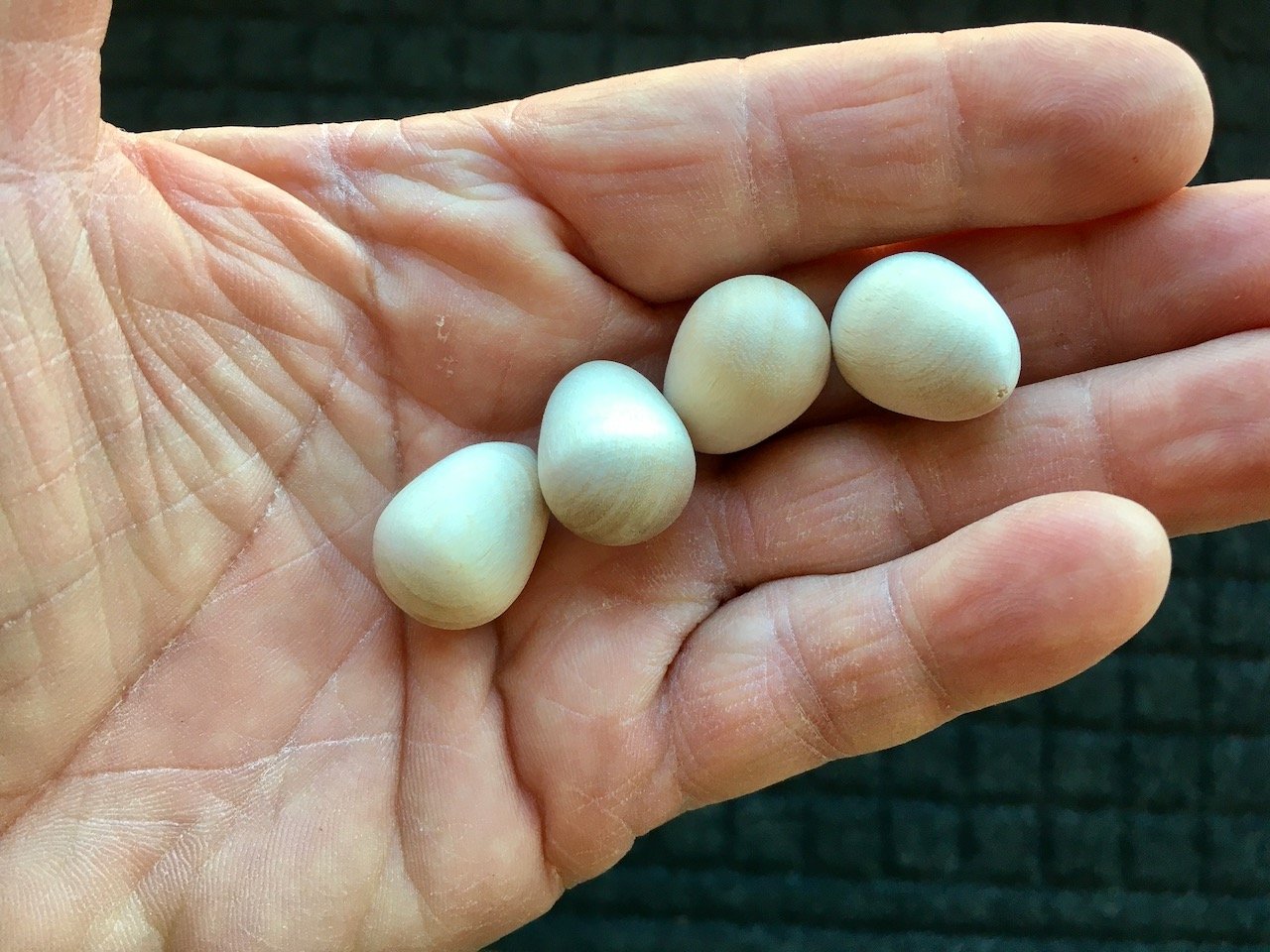
Wooden eggs from Woodpeckerscrafts.com. These are 7/8″ wooden wren eggs. Photo credit R. Whitescarver.
Hopefully, your nest boxes will be occupied by our native birds such as Eastern Bluebirds, Tree Swallows, and Carolina Chickadees.
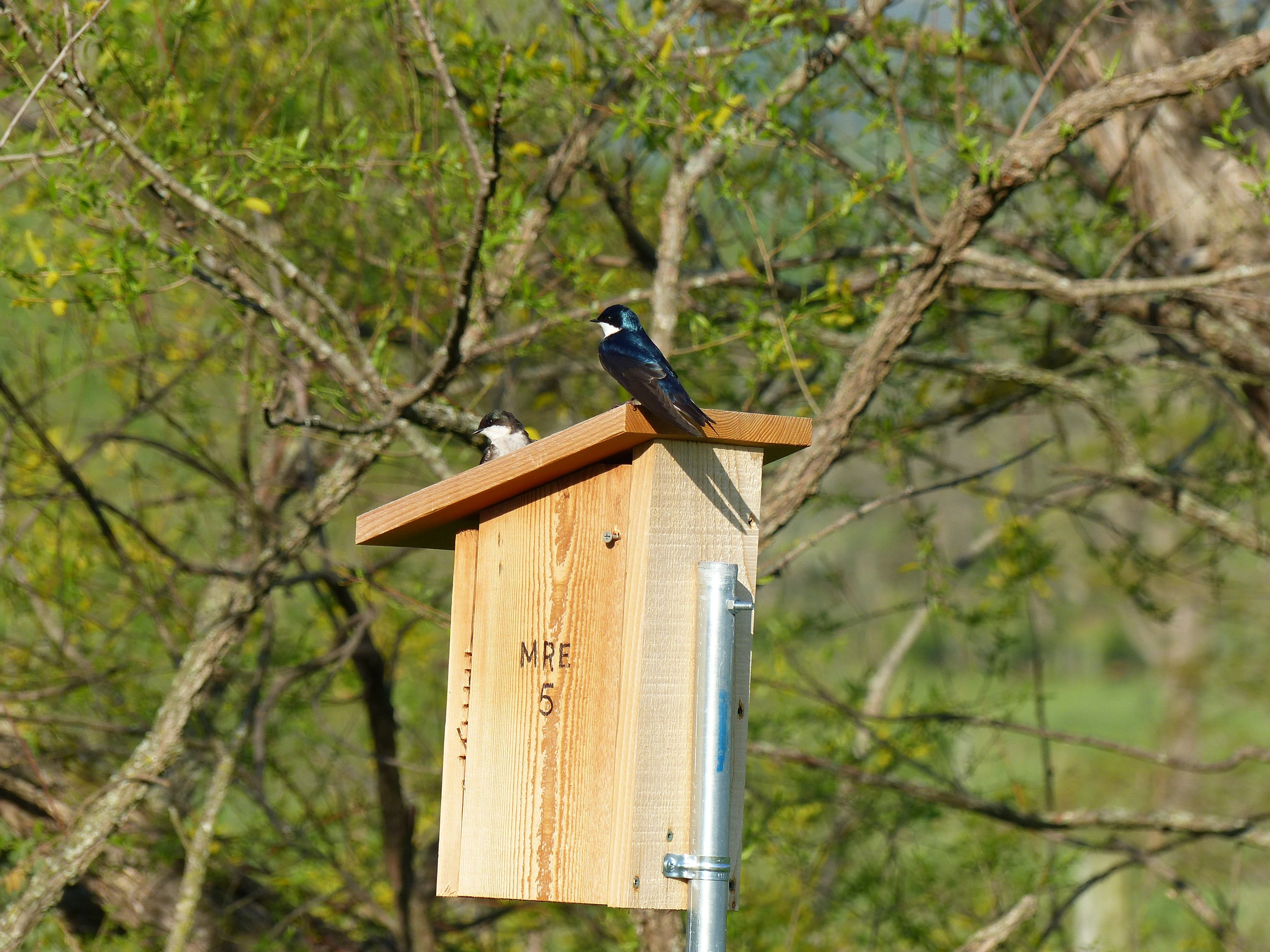
Tree Swallows guarding their nest box in Swoope along the Middle River. Photo by R. Whitescarver.
© Robert N. Whitescarver 2017, revised April 5, 2020, and again today.
The post Eliminate the House Sparrow From Your Nesting Box–Raise the Floor appeared first on Getting More on the Ground.