We are frequently asked, “Is the River “safe?” As much as we might want to, we are not able to state whether a section of the
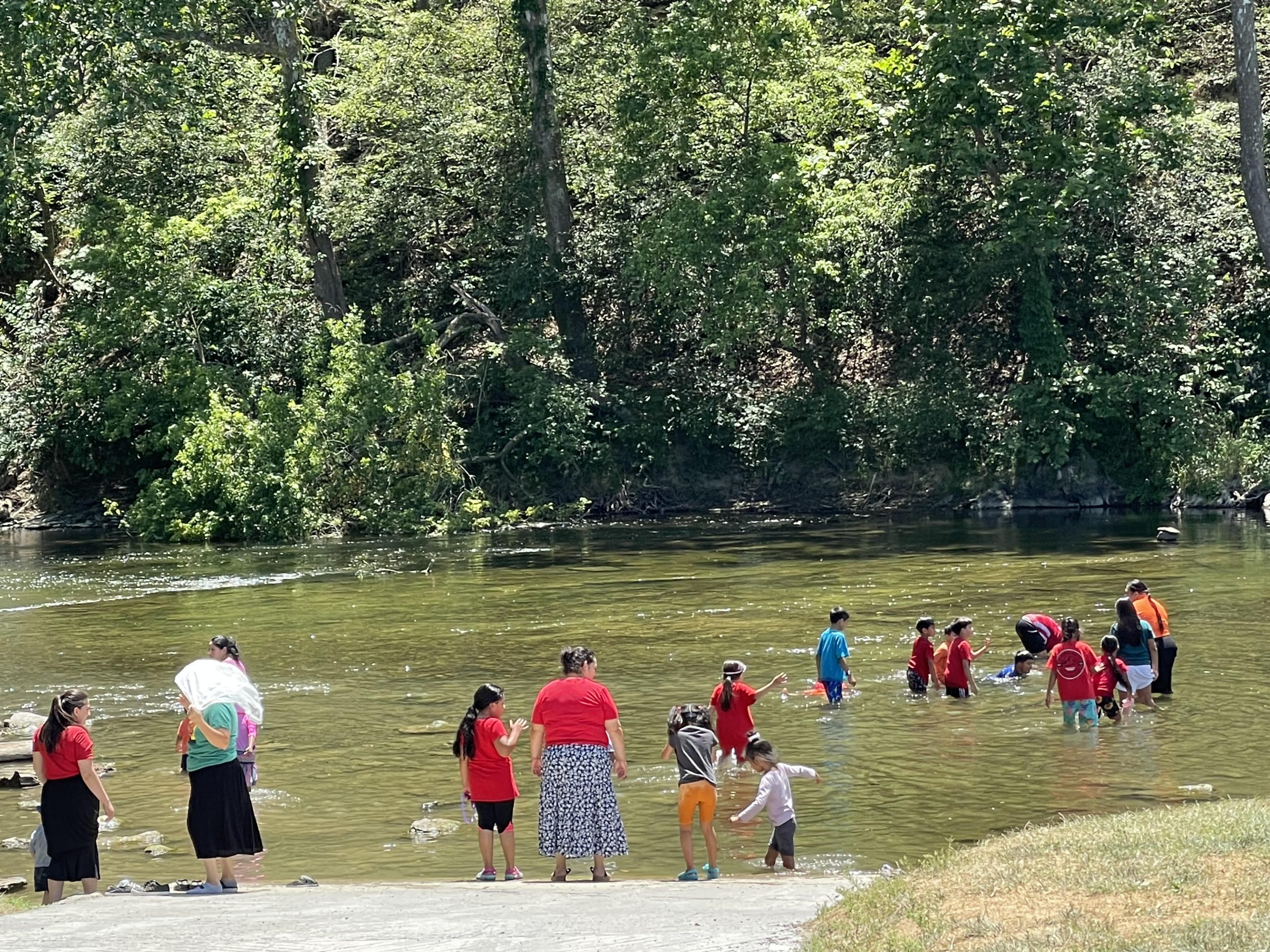
07.01.2024 FSSP North Fork Shenandoah River @ public boat launch in Strasburg Park, Shenandoah County, VA
River is safe or not because while in the River one could step on a bottle top or fish hook causing injury, hit a submerged log, or come in contact with other hazards. What we do provide is weekly real-time scientific-based accredited E. coli concentration results for river recreation users to make their own informed decision about potential associated health risks when recreating in the areas of the river tested. It is also important to remember that these results provide a snapshot of the E. coli bacteria concentrations at the designated sites on the date, time, and under the conditions that the water samples were collected. Overall the E. coli bacteria levels at the sites that Friends of the Shenandoah River (FOSR) monitor on the North Fork, South Fork, and Main-stem as part of our summer E. coli Testing Program at public access sites have been below the the US Environmental Protection Agency recommended precautionary “do not exceed” freshwater Beach Action Value (BAV) of 235 CFU of E. coli bacteria per 100 mL of water sample for early alert to recreators, including families with children. Any single sample above the freshwater BAV could trigger an alert notification until another sample below the freshwater BAV is collected. If conditions remain the same, dry, the trends indicate that E. coli levels may remain below 235 at the River sites tested.
The two sites that have routinely exceeded freshwater Beach Action Value (BAV) of 235 CFU of E. coli bacteria per 100 mL of water sample are tributaries. Site FPHCTL located on the Hawksbill Creek of Luray off Virginia Ave. (Rt. 340) @ Pocket Park in Town of Luray in Page County. The other site is FW36, the water sample is collected from Manassas Run, a tributary that flows into the River, upstream of its confluence with the Main-stem of the Shenandoah River in Warren County.
We monitor three sites near Morgan’s Ford bridge in Warren County, FW 35, FW35Mid, and FW36.
- Site FW35 – the water sample is collected along the bank of the Main-stem Shenandoah River at Morgan’s Ford bridge public boat landing immediately downriver of the confluence with Manassas Run
- Site FW35Mid – the water sample is collected mid-width (in the middle of the third pylon out from the eastside) of the Main-stem Shenandoah River at Morgan’s Ford bridge
- Site FW36 – the water sample is collected from Manassas Run, a tributary that flows into the River, upstream of its confluence with the Main-stem of the Shenandoah River
Site FW 36, Manassas Run, typically has elevated E. coli levels that at times can contribute to higher E. coli levels along the bank, at site FW35, then the E. coli levels measured just straight out further in the middle of the River at site FW35Mid. Typically, people, especially children, can be seen playing in the river along the bank just downstream of the confluence of Manassas Run. We collect the three samples at this site to make people aware of the immediate effect a tributary can have on water-quality just downstream of a confluence.
The post “Is the River Safe”? appeared first on FOSR.