
Climate Change
Journal entry July 18: “I can’t see the mountains this morning.” Smoke from the wildfires in Canada, a thousand miles from our farm, blocked the view of Crawford Mountain. The foot of that mountain is less than two miles away. The Earth is literally on fire. Even AI admits that “extreme climate change, severe heatwaves, and worsening wildfires are causing widespread environmental damage.” I could not have stated it better. AI also states that “extreme heatwaves in 2026 have caused tens of thousands of deaths globally.”
Political leadership in America espouses the advancement of AI but fails to heed its warnings on climate change. Instead of facing the challenge to fight climate change, our political leadership has embraced the main driver of it—the burning of fossil fuels. The rest of the world understands the crisis and is moving forward with the transition to renewable energy.
Wind Damage
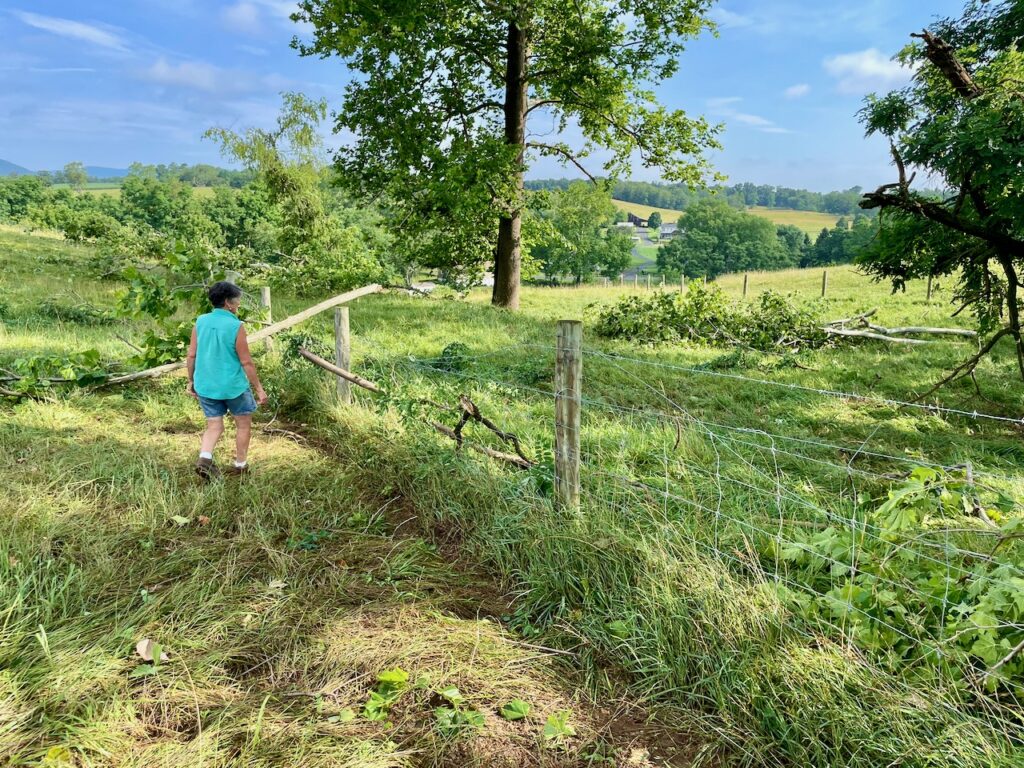
My heart aches for those affected by the fires, floods, high winds, and other weather events caused by Earth’s warming. We had our own damage at Whiskey Creek from climate change during the nights of July 4 and 5. Severe winds felled many trees and broke many limbs. We lost power both nights.
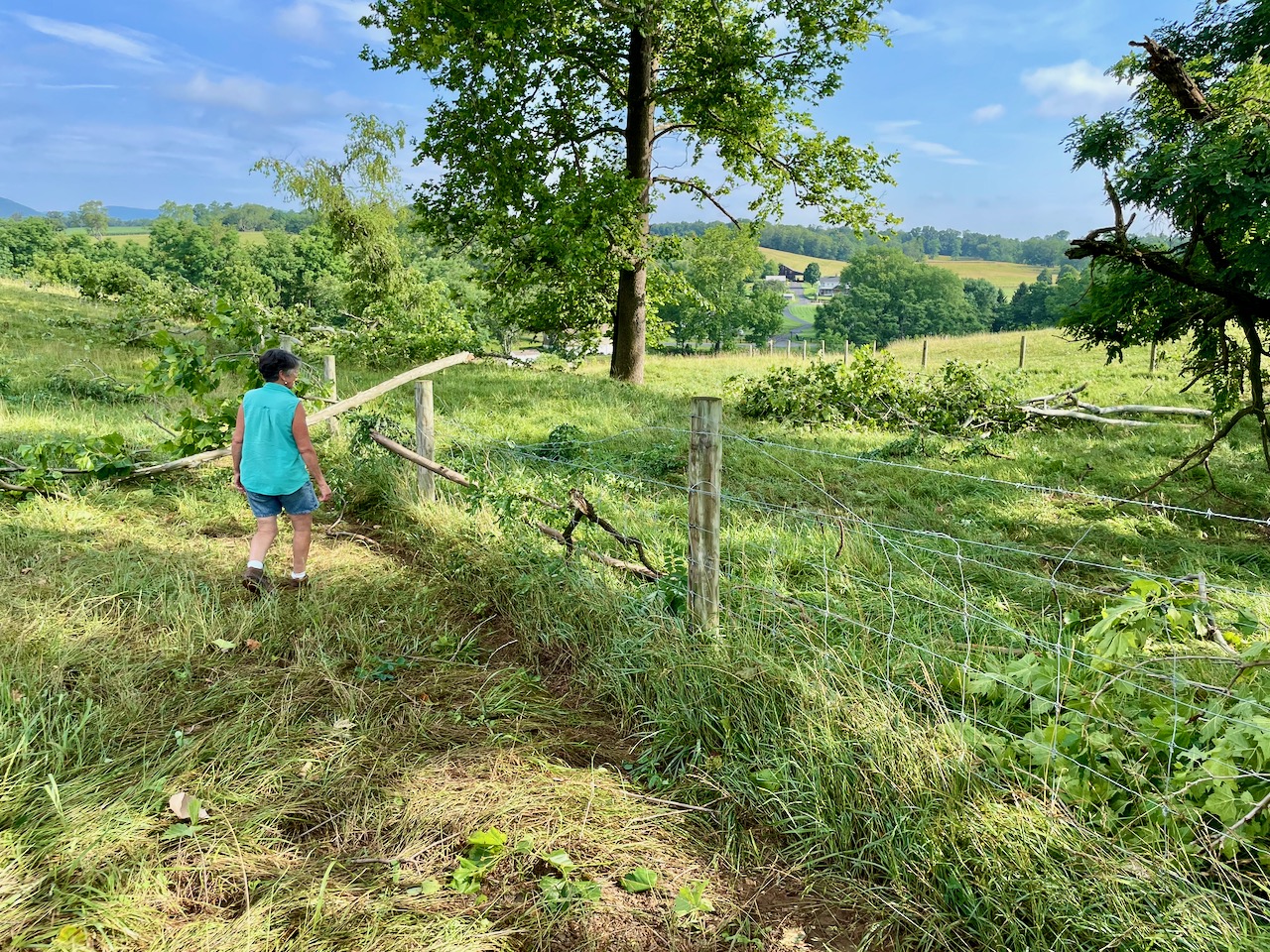
Wind damage from the July 5 storm.
It took three days of hard work with a chainsaw just to get the trees and limbs off the fences. It will take months to clear the debris from the fields.
Instead of burning the wood from the fallen trees and releasing its carbon back into the atmosphere, we rented a chipper to grind the wood into mulch that will put its carbon in the largest terrestrial carbon sink on earth—the soil.
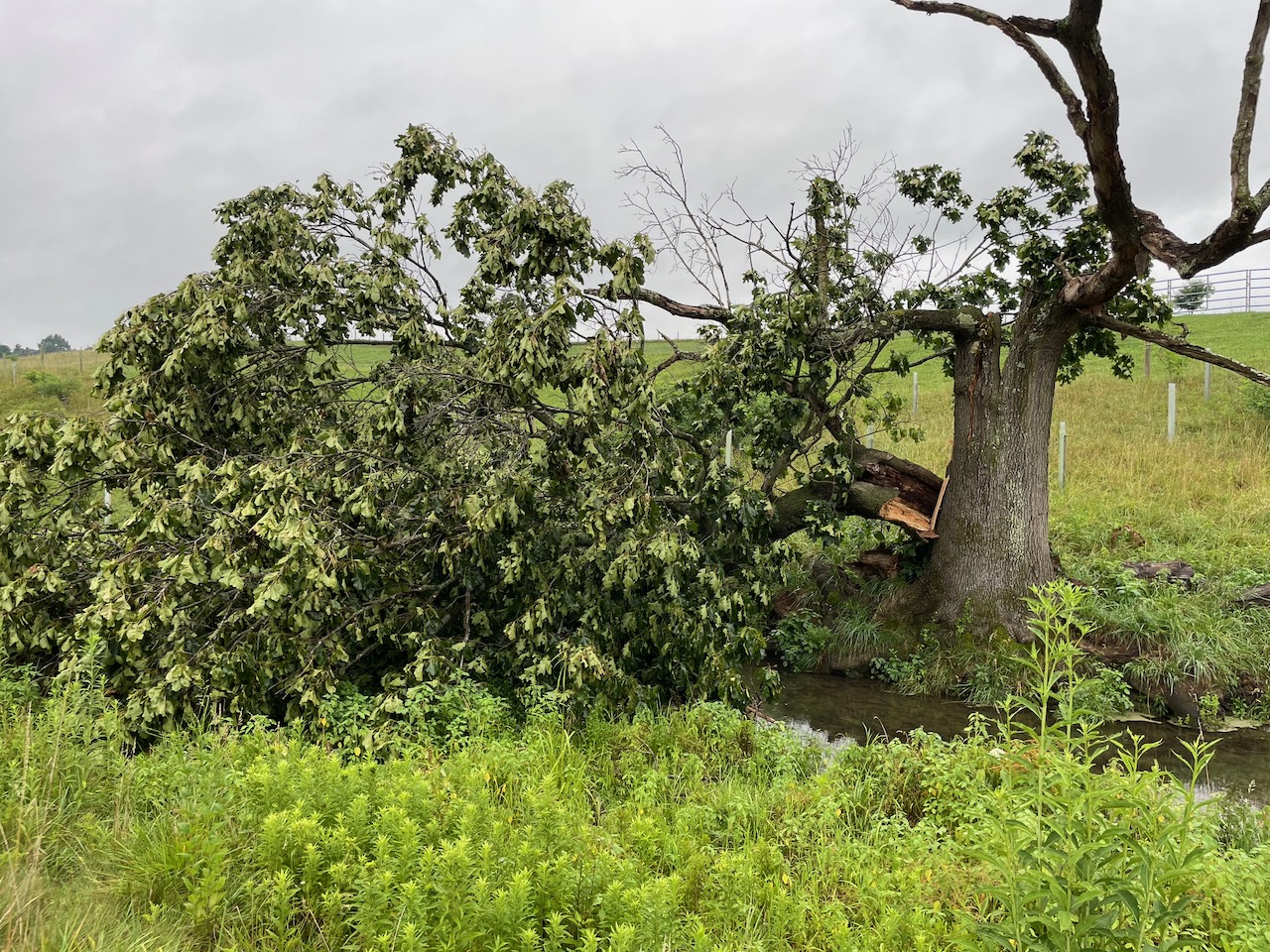
Wind damage of a Black Oak tree at Whiskey Creek.
We used the chips from the fallen huge Black Oak tree and Black Locust limbs to refurbish our wine cap mushroom bed and to mulch the gardens. Much of the carbon in the wood chips will be consumed by fungi to form mycelium, as well as other compounds like glomalin that help soil particles lock carbon in the living soil.
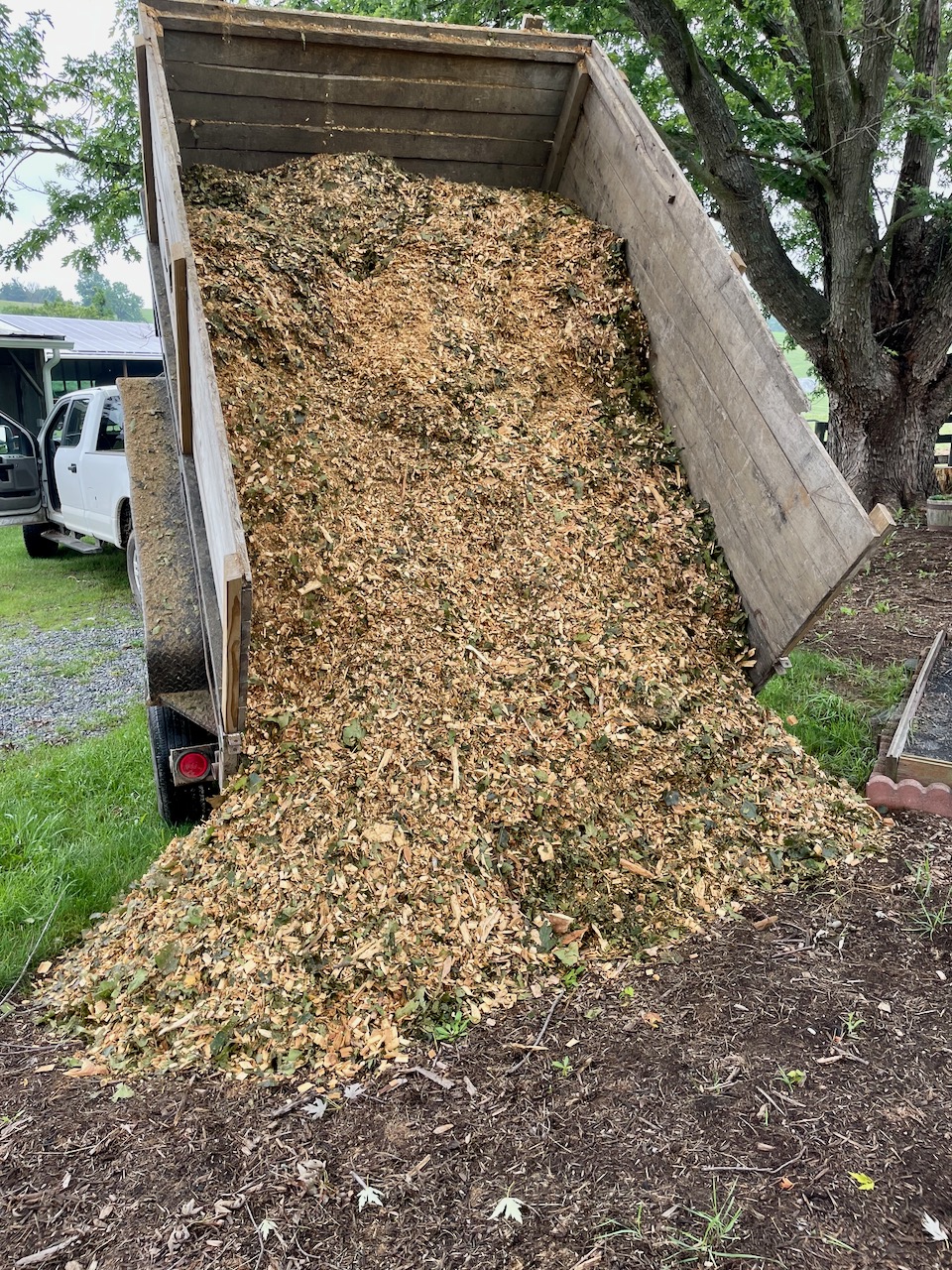
Wood chips from the fallen Black Oak.

A harvest of wine cap mushrooms at Whiskey Creek.
Mycofiltration
Myco is the scientific prefix for fungi. I am involved in a mycofilter experiment with my mycologist friends Chris and Vicki Vacher of Enchanted Nature, a non-profit for the advancement of fungi knowledge. They were searching for a small stream to determine whether a mycelium-laden filter would reduce the E. Coli in the water. It most certainly did. We took water samples from an unnamed tributary of Lewis Creek in Staunton, Virginia. In the first trial, the unfiltered water from the stream had an E. Coli count of 400 colony-forming units per 100 milliliters of water. The water that traveled through a mycelium-laden filter had ZERO. This experiment was repeated two more times with basically the same results: significant reduction in E. Coli. The initial report is available on the Enchanted Nature website.
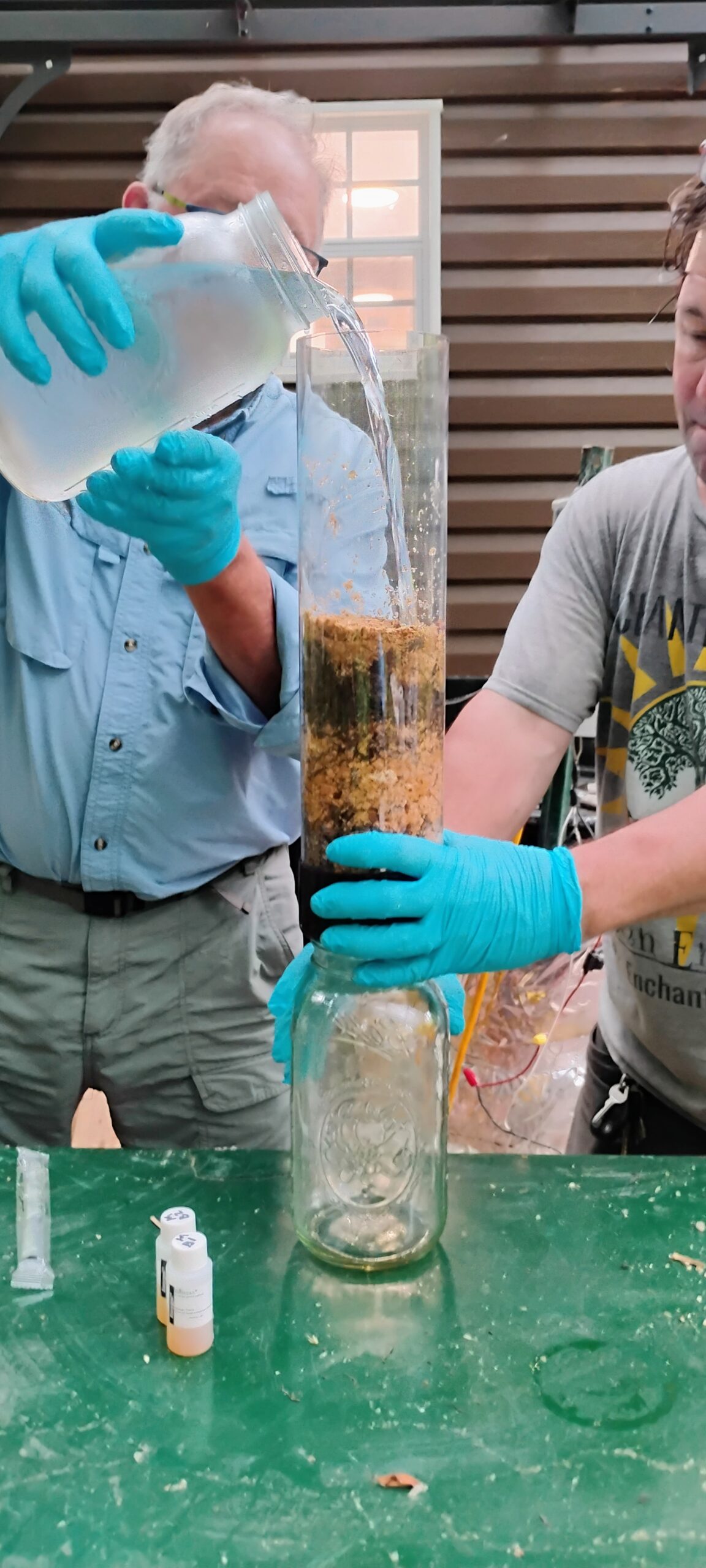
I’m pouring water from the stream into a filter laden with mycelium held by Chris Vacher. Photo credit Cory Egger
The design for an instream mycofilter is underway with an interdisciplinary team that includes the Lewis Creek Committee, the City of Staunton, Enchanted Nature, and volunteers.
American Barn Owl
The American Barn Owl is a Tier 1 species—those of greatest conservation concern—according to the Virginia Bird Atlas and the Virginia Wildlife Action Plan of 2025. The population of this native resident bird of prey is declining because of diminishing grassland hunting grounds and suitable nesting sites such as large hollow trees, abandoned silos, and old barns.
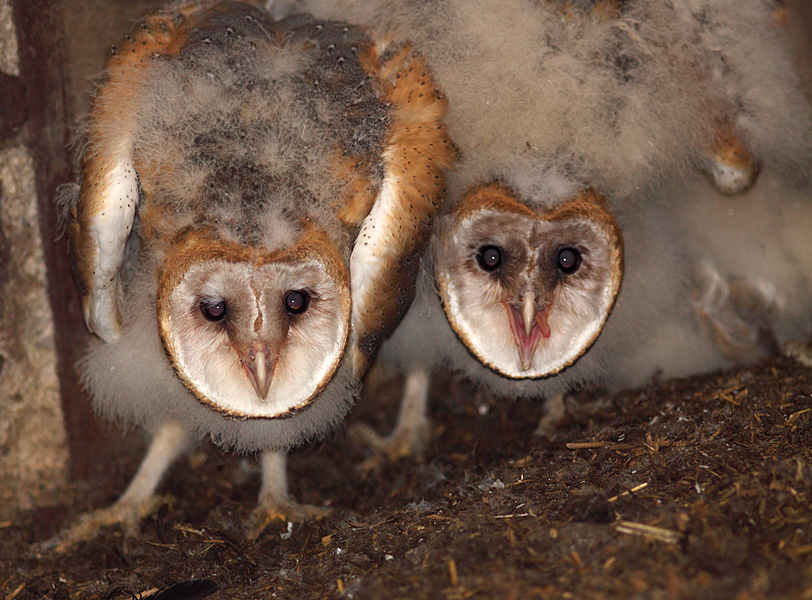
American Barn Owls. Photo credit Marshall Faintich
The diet of the American Barn Owl consists mainly of field mice, voles, and rats found in grasslands. That means farmland, especially pastureland and hayfields, is imperative for their survival. Unfortunately, farmland is being converted to nonfarm uses at a rate of 40 acres every hour in the United States.
To help alleviate this problem, the Augusta Bird Club has initiated a program to install American Barn Owl nesting boxes on farms with suitable habitat. Our farm was selected to participate. On July 23, a team from the club erected a nesting box overlooking grasslands in every direction.
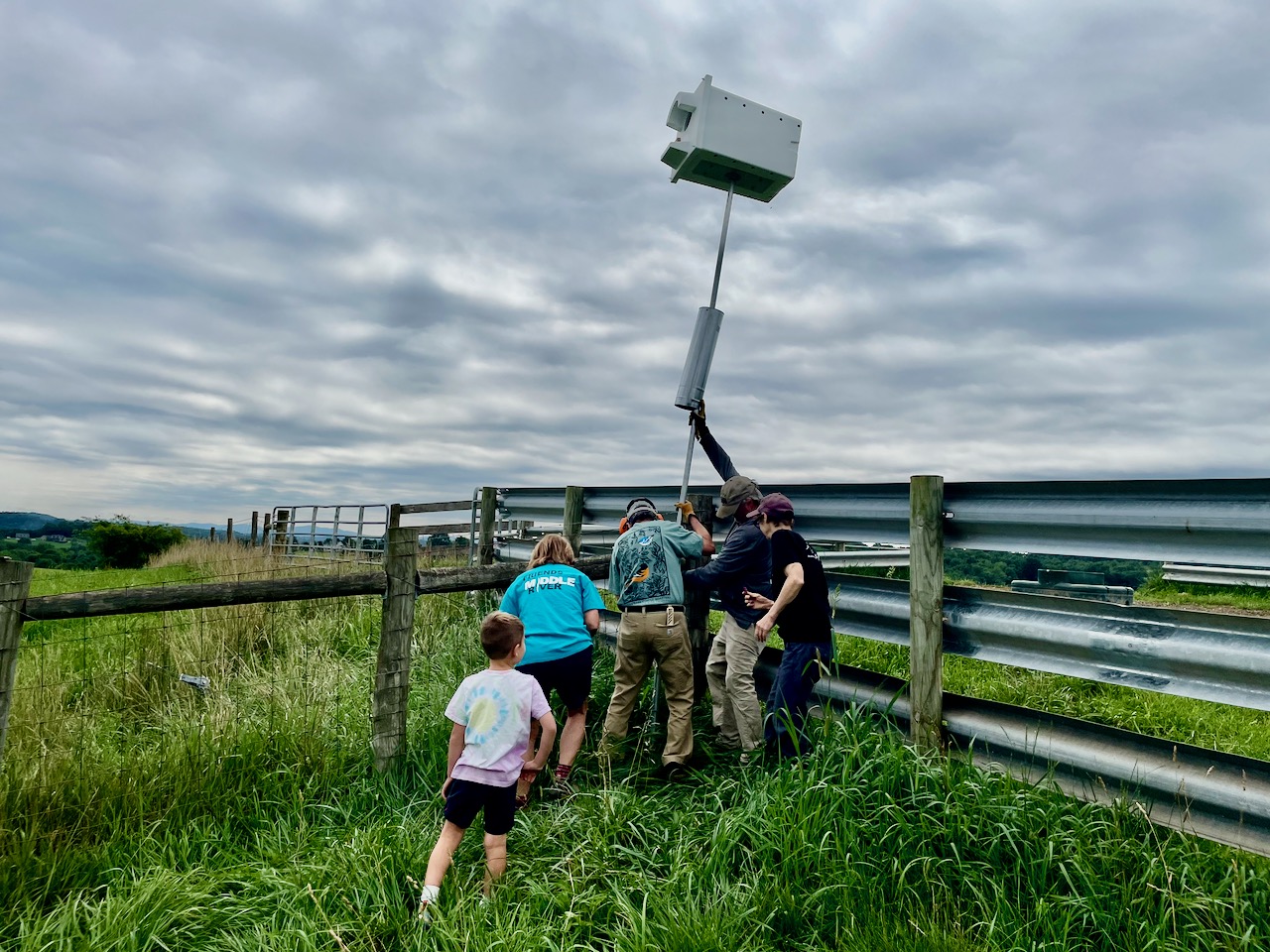
Members of the Augusta Bird Club erecting an American Barn Owl nest box at Whiskey Creek.
If you have grassland acreage or would like to donate to the cause, please contact the Augusta Bird Club.
Note: This was written by a real person: me. There are no paywalls, ads, AI, or surveys.
The post Whiskey Creek Almanac: August 2026, Climate Change, Mycofiltration, and the American Barn Owl appeared first on Getting More on the Ground.
