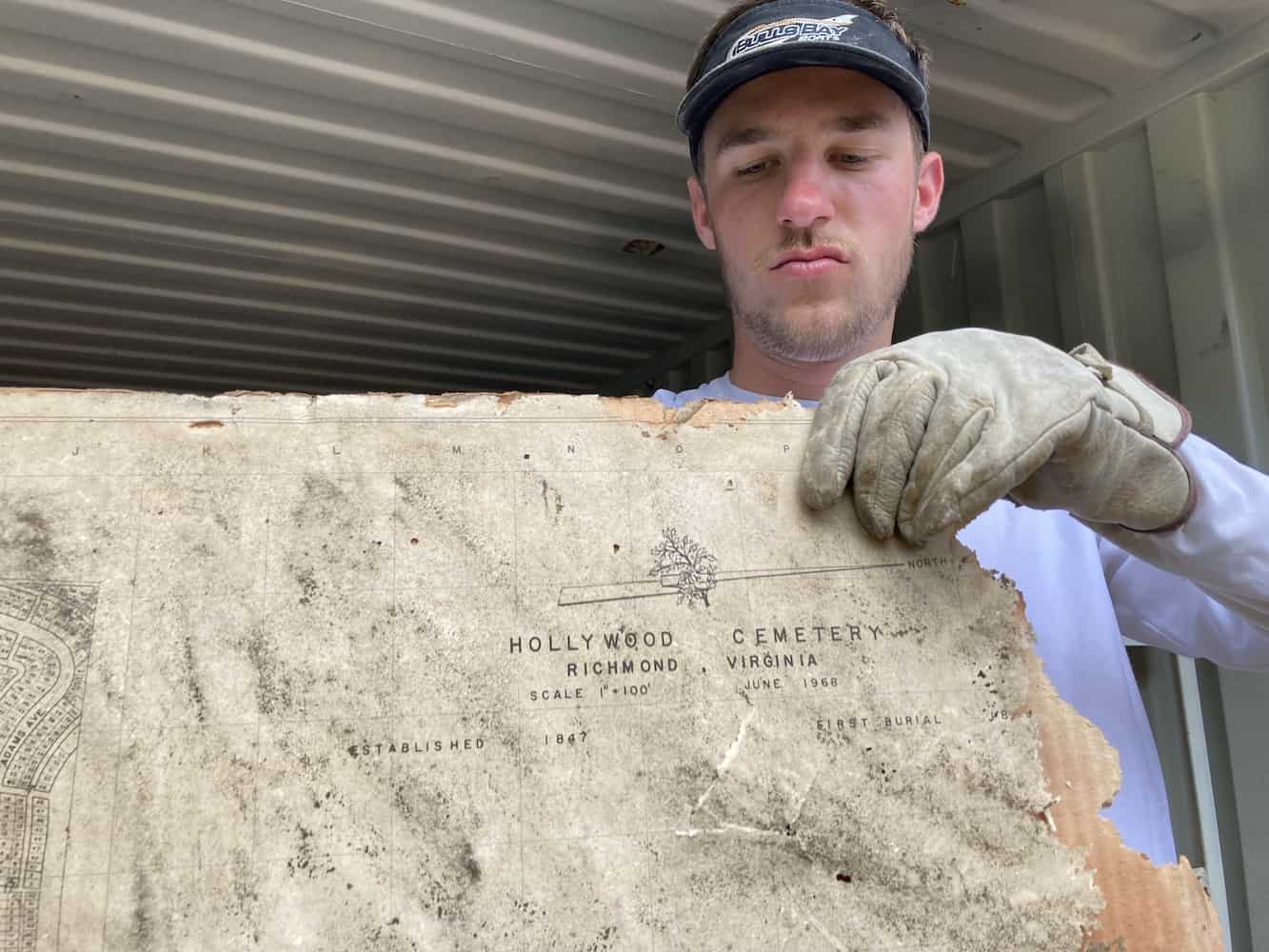
As support for local conservation grows in our region, Capital Region Land Conservancy is always happy to welcome new conservationists to the field. This summer, CRLC was lucky enough to bring on a Summer Intern to help with invasive species management and field work at a number of properties that CRLC protects. Summer Intern Cole Myers has been a valuable addition to the stewardship team, and we are excited to introduce you!

“My name is Cole Myers, and I am attending Clemson University majoring in Environmental Science and Policy.
I was drawn to this internship for many reasons. I really wanted to gain some more insight on this field of work and see what truly interests me. I also liked the idea of doing hands-on field work, and thought that I could learn a lot about how land trusts like CRLC operate. Through this internship I also wanted to expand my knowledge of the many native and invasive plants of Virginia.
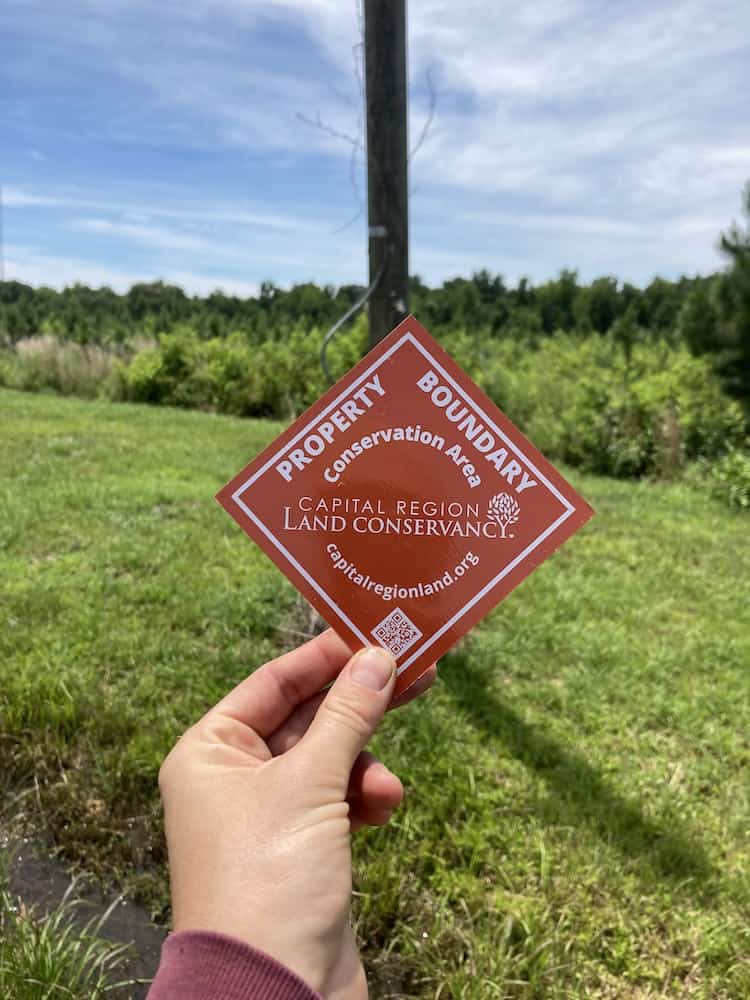
During my internship, I have dug many a post hole, and posted hundreds of boundary signs surrounding properties which CRLC has acquired. Along with this I have worked on the removal of the invasive plant Privet which I have naturally come to despise. This work is physically demanding yet seriously rewarding as we often have to fight our way through thick patches of briars and blackberry bush in order to remove Privet or nail a sign to a tree.
My favorite part is all the learning experiences I have had while in the field. For instance I have learned quite a bit about different plants and the habitat in which they thrive, and have seen connections between human disturbances and the impacts that it has on the natural environment. Using GPS to navigate through woods and swampland can be a struggle at times, but I also find that piece of the work to be extremely satisfying which also makes that a favorite.”
One of the projects that Cole worked on through his Internship was assisting in the control of invasive species on the Varina Landlab property in Varina, Virginia. Ashley Moulton, Land Conservation Specialist asked Cole some questions regarding his experience in the field:
- What did you learn about invasive species control?
“Through the process of removing the invasive plant Privet, I have learned that it can become super prominent and clog up natural areas. Once removed, it is crazy to see all the ground space that it takes up where other native plants could be growing. I have learned that it is very important to use the proper techniques to remove these plants so as to make sure it will not grow back again.”
- What does an infestation look like?
“If you know what you are looking at and you know what should and shouldn’t be in a certain area, infestations can look like whole swaths of thick Japanese stilt grass filling up entire creek beds, or maybe a tall and healthy stand of Mimosa. To the untrained eye it may look like a healthy forest but when you learn what to look for it can be a serious eye sore.”
 What was the hardest part of controlling an infestation/or land management in general?
 What was the hardest part of controlling an infestation/or land management in general?
“Working in the heat of the summer with hand saws and trimmers is physically draining work. It can be exhausting so staying hydrated is really key. The controlling of an infestation of Privet can get mentally challenging when it feels like you’re barely making a dent, but you gotta keep your head down knowing that every tree you cut down is making it easier for native plants to grow back and repopulate the area.”
- Any recommendations you have for those who are trying to control invasive plants or identify them on their property?
“I’ve learned that there are quite a few techniques one can use to control invasives and you’ve gotta pick the one that’s going to work best in your particular situation. Once you pick a technique, stick to it, see if it’s working out and then grind it out until you’ve wiped out the whole deal. Seeing it through seems super critical because if you leave just a few plants they’ll come back when you’re not looking and reinstate themselves”


The post Meet CRLC Summer Intern Cole Myers! first appeared on Capital Region Land Conservancy.