Earthrise over the moon from the Apollo 11 mission taken in 1969. Photo credit NASA.
Earth Day 50
This year marks the 50th anniversary of Earth Day, which officially occurs on April 22. In a normal world, this would be a really big deal and we’d be gearing up for a big celebration—Earth Day helped elevate the importance of protecting our environment in a whole new way. But it’s hard to think about pollinator corridors and carbon sequestration during the COVID-19 pandemic.
As I write this, thousands of people are dying, millions are unemployed, medical supplies are dwindling, and social distancing is the new norm. Earth Day Staunton was canceled, as were in-person events across the country. But hopes of flattening the curve and a brighter future abound. We will get through this and we will carry on. Cheers to Earth Day 50! Are you ready for some positive and uplifting news about our environment? Read on.
Virginia Clean Economy Act
This year, Virginia passed the most sweeping environmental laws in its history. To fight the climate crisis, the General Assembly passed the Virginia Clean Economy Act. It gives us a path to make energy production in Virginia carbon-free by 2045 and shuts down dirty coal-fired power plants by 2030. It kickstarts massive offshore wind production, adds more incentives, and removes barriers for rooftop solar systems.
Regional Greenhouse Gas Initiative
Virginia will also enter the Regional Greenhouse Gas Initiative, which is a multistate carbon-based market that will lower power plant pollution and direct millions of dollars toward low-income energy efficiency programs and protections in flood-prone communities.
Solar power is now more affordable, more accessible, and more prevalent than ever before. Last year solar power supplied 40 percent of all new electric capacity to the grid, and the solar industry now employs almost 250,000 Americans.

Altenergy Staunton crew at Meadow View in Swoope. Photo credit R. Whitescarver
Livestock Exclusion From Perennial Streams
The Virginia General Assembly also passed legislation that sets a deadline of July 1, 2026, for fencing cattle out of perennial streams. Valley farmers have led the state in these measures, but there is much more to do.
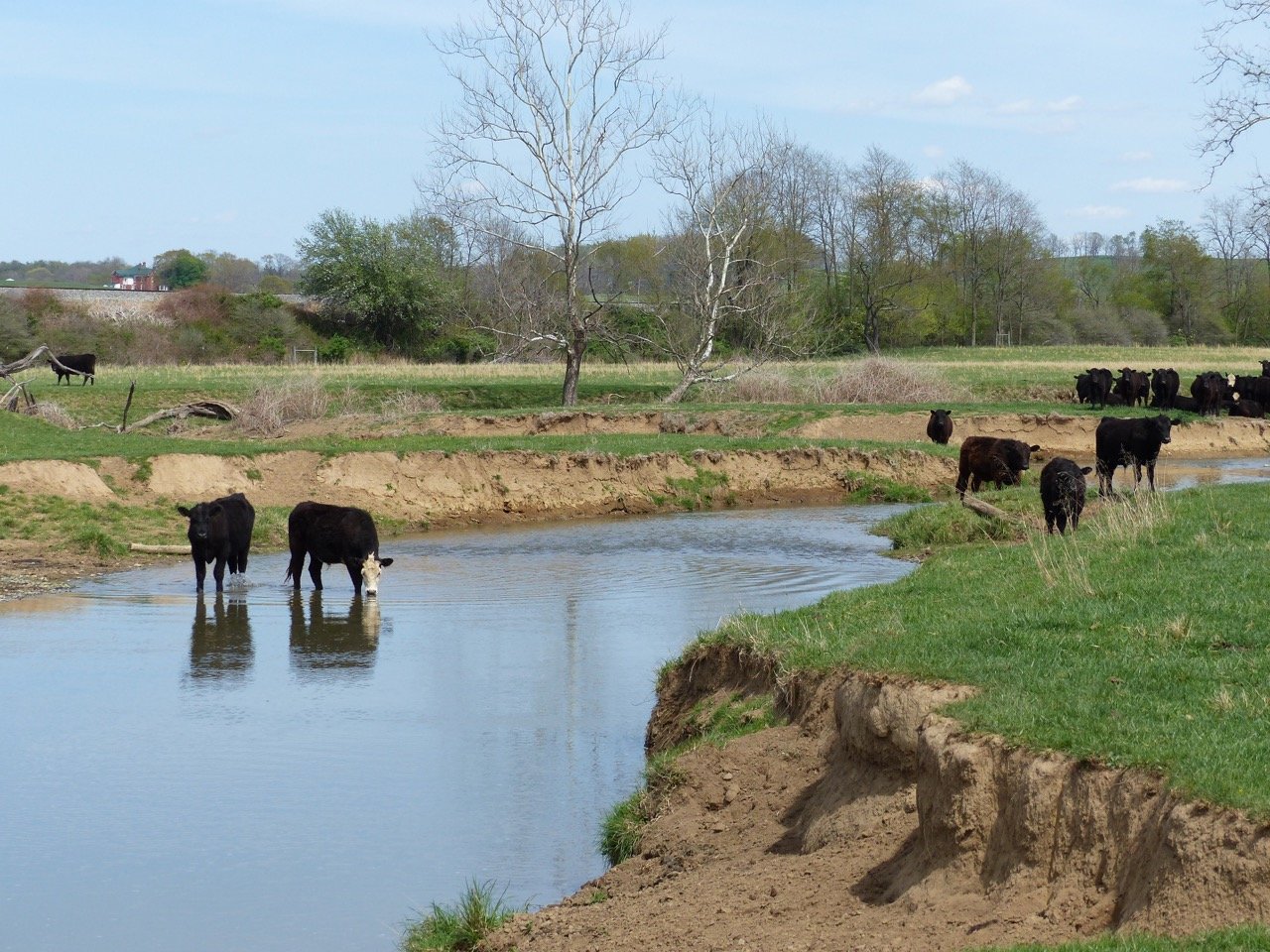
Livestock, especially cattle destroy stream banks and pollute the water with their manure and urine. Livestock exclusion from perennial streams is one of the most cost-effective ways to improve water quality. Photo credit R. Whitescarver.
Fifty years ago, we’d never heard of livestock exclusion from streams or riparian forest buffers. Today, livestock exclusion from streams is one of the most popular best management practices on farmland and over 2,000 acres of riparian buffers have been established in Augusta County and in the City of Staunton. The buffer along Bells Lane in Staunton is a classic example.
Plastic Bag Tax
Virginia Senate Bill 11 deals with disposable plastic bags. It authorizes any county or city to impose a tax of 5 cents per bag beginning January 1, 2021. I encourage our local leaders to adopt this enabling legislation.
Wastewater Treatment Best in the World
We have the best waste-water treatment in the world right here in the Valley. Fifty years ago, we only separated the solids from our wastewater. Today, we remove the solids, kill the bacteria, and remove nutrients.
Four Million Acres of Virginia Protected Forever
Fifty years ago, we’d never heard of conservation easements. Today more than 4 million acres of Virginia have been protected forever from unwise development.
The Most Pressing Issues
Search the internet for the most pressing environmental issues facing us today, and you will find that the climate crisis, waste disposal, pollution, and overpopulation are on the shortlist.
In 1970, world population was 3.6 billion. Now 50 years later, world population has more than doubled to 7.8 billion. Geologists call our period in time the Anthropocene, meaning that human activity has the most influence on our climate and the environment.
Chesapeake Clean Water Blueprint Successes
The good news is that although the world’s population has more than doubled, our streams are cleaner than they were 50 years ago. The Chesapeake Bay is healthier today than it was in 1970.
Virginia, along with the other five Chesapeake Bay watershed states and the District of Columbia, has implemented plans to remove the Bay from the national dirty waters list by 2025. It’s called the Chesapeake Clean Water Blueprint and it’s working.
Earth Day 50—We’ve Come a Long Way
We have come a long way. Slowly but surely we have become more responsible. I am uplifted by the ingenuity of the American people, the excitement of our youth and grassroots organizations, the creative incentives empowered by our government, and the development of environmental laws that have gotten us this far despite all the pressure we put on the environment.

James Madison University students Rachel Vannetta, Celeste Horton, and Laura Yates planting trees along a tributary of Linville Creek in Rockingham County. Photo credit R. Whitescarver.
Even if we can’t be together this Earth Day, there’s plenty to celebrate, for sure.
The post Earth Day 50 During the COVID-19 Pandemic (JMU 2020) appeared first on Getting More on the Ground.